Live prices from 24 UK suppliers, from £14.99, compared side by side so you never overpay.
Copy the code — you'll paste it at checkout.
with our exclusive code
You're about to visit an external supplier
with our exclusive code
By clicking "Continue", you acknowledge that you understand and accept the above. Read our full disclosure.

AHK-Cu 100mg

AHK-Cu 100mg

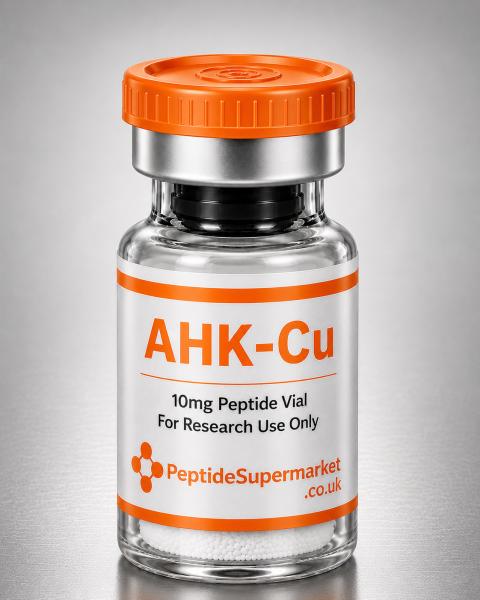
AHK-Cu



AHK-Cu


AHK-CU 100mg


Compare 16 prices for AHK-Cu. Cheapest: £19.99. Average: £46.54.
| Compare | Visit | |||||||
|---|---|---|---|---|---|---|---|---|
| £30.00 | £0.30/mg | In Stock | Free over £100 |
Lab Tested
|
— | |||
| £47.00 | £0.47/mg | In Stock | Free over £100 |
Lab Tested
|
— | |||
| £26.95 | £0.27/mg | In Stock | Free over £75 |
Lab Tested
|
— | |||
| £53.35 | £0.53/mg | In Stock | Free |
—
|
— | |||
| £19.99 | £0.20/mg | In Stock | Free over £75 |
Lab Tested
|
— | |||
| £29.95 | £0.30/mg | In Stock | Free |
—
|
— | |||
| £134.40 | £1.34/mg | In Stock | Free over £100 |
Lab Tested
|
— | |||
| £34.99 | £0.35/mg | In Stock | Free |
Lab Tested
|
— | |||
| £30.00 | £0.30/mg | In Stock | £9.99 |
—
|
— | |||
| £34.00 | £0.34/mg | In Stock | Free |
—
|
— | |||
| £55.00 | £0.55/mg | In Stock | Free |
Lab Tested
|
— | |||
| £24.95 | £0.25/mg | In Stock | £9.99 |
—
|
— | |||
| £35.00 | £0.35/mg | Low Stock | Free over £200 |
Lab Tested
|
— | |||
| £44.00 | £0.44/mg | In Stock | £9.99 |
—
|
— | |||
| £50.00 | £0.50/mg | In Stock | £9.99 |
—
|
— | |||
| £95.00 | £0.95/mg | In Stock | £9.99 |
—
|
— |
More ways to compare AHK-Cu
Different views of the same live UK pricing, tuned for how you like to shop.
Compare another peptide
All purchases are made directly from third-party suppliers; your relationship is solely with them. We accept no liability for the quality, purity, or legality of any products listed.
We may earn a commission when you click through to a supplier and make a purchase. This does not affect pricing information displayed.
By using this site you accept responsibility for ensuring purchases comply with applicable laws in your jurisdiction. Read our full disclosure.
Hair Growth Copper Peptide | Dermal Papilla Stimulator
Synthetic copper-binding tripeptide targeting dermal papilla cells and hair follicles. Stimulates hair follicle elongation, promotes cell proliferation, increases VEGF production, and inhibits TGF-β1. Supports skin regeneration through fibroblast activation and collagen synthesis.
AHK-Cu penetrates scalp delivering copper directly to dermal papilla cells. Activates proliferation pathways, elevates Bcl-2/Bax ratio (anti-apoptotic), increases VEGF for blood flow, reduces TGF-β1, and promotes SOD production for oxidative stress reduction.
L-Alanyl-L-Histidyl-L-Lysine (Ala-His-Lys)
Ex vivo studies demonstrate AHK-Cu stimulates human hair follicle elongation at concentrations as low as 10⁻¹² M, promoting longer anagen phase.
Increases proliferation of dermal papilla cells, the key regulatory cells for hair follicle cycling and hair growth.
Boosts vascular endothelial growth factor production, improving blood flow and nutrient delivery to hair follicles.
Reduces TGF-β1 secretion and oxidative stress (via SOD), both contributing to DHT-induced follicle miniaturization.
Activates fibroblast proliferation and collagen synthesis for improved skin structure and wound healing.
Elevates Bcl-2/Bax ratio and reduces caspase-3 activation, protecting cells from programmed death.
Promotes collagen and ECM component deposition for tissue renewal and repair.
Primary and most researched delivery route. Penetrates scalp and skin to target dermal papilla cells and fibroblasts. Most effective for hair growth and skin regeneration applications.
| Goal | Dose | Frequency | Route |
|---|---|---|---|
| Hair Growth - Scalp Application | 0.5-1% solution/serum | Once or twice daily | Topical to scalp |
| Hair Growth - Combined Protocol | 0.3-0.5% AHK-Cu with minoxidil | Once or twice daily | Topical to scalp |
| Skin Regeneration | 0.3-1% in serum/cream | Once or twice daily | Topical to skin |
| DIY Formulation | Add 0.3-1% to water phase | Cool-down phase (<40°C) | Custom formulation |
Limited research compared to topical. Some practitioners use injectable AHK-Cu via mesotherapy (microinjections) for scalp and facial rejuvenation.
| Goal | Dose | Frequency | Route |
|---|---|---|---|
| Mesotherapy - Scalp (Practitioner) | 0.1-0.5 mg per injection site | Weekly sessions | Intradermal microinjections |
| Research Protocol | 1-5 mg | 2-3 times weekly | SubQ |
Complementary copper peptides targeting different aspects of tissue regeneration. GHK-Cu excels at skin repair while AHK-Cu targets hair follicles.
Both promote hair growth via different mechanisms - minoxidil via potassium channel opening and vasodilation, AHK-Cu via dermal papilla stimulation.
5-alpha reductase inhibitors block DHT production while AHK-Cu may help counter DHT effects on follicles.
Risk of copper toxicity when combined with additional copper sources. Monitor total copper intake.
Different tissue repair mechanisms - BPC-157 promotes systemic healing while AHK-Cu targets skin/hair.
Low pH of ascorbic acid can destabilize copper peptides. Use at different times.
Acidic exfoliants can destabilize copper peptide complexes. Use at different times.
Both are potent actives that can cause irritation. Introduce slowly or use at different times.
Excellent combination - hyaluronic acid provides hydration and supports peptide penetration.
No visible changes; peptide is working at cellular level
Some users report reduced hair shedding; scalp may feel healthier
Vellus (fine) hairs may begin appearing in thinning areas
New growth becoming visible; existing hairs may appear thicker
Noticeable improvement in hair density and quality
Significant results visible; continued improvement expected
Full results achieved with consistent use
AHK-Cu (10⁻¹² to 10⁻⁹ M) stimulated human hair follicle elongation ex vivo and dermal papilla cell proliferation in vitro. Elevated Bcl-2/Bax ratio and reduced cleaved caspase-3/PARP levels indicate anti-apoptotic mechanism.
Copper tripeptide complexes increase VEGF production while decreasing TGF-β1 secretion by dermal fibroblasts.
Evaluated transdermal delivery of copper tripeptide, demonstrating penetration through skin layers with potential for topical therapeutic applications.
Novel delivery system using thermodynamically stable ionic liquid microemulsions to improve topical delivery and stability of copper tripeptides.
Plain-English guides and study summaries from published literature.
Be the first to know when prices drop on your favourite peptides
No spam. Unsubscribe anytime. We respect your privacy.