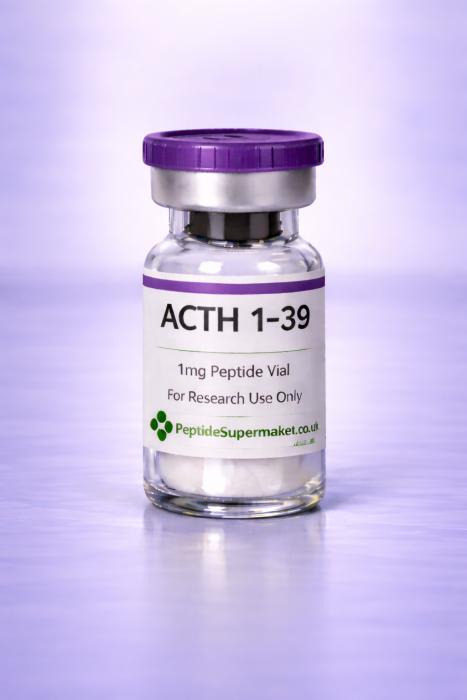
One of the best ways to understand ACTH is to look at the gland it influences. ACTH is closely associated with the adrenal cortex, the outer part of the adrenal gland, where several important hormone groups are produced.
That makes it a useful entry point for anyone trying to understand how stress signalling links to mineral balance, metabolism and androgen production.
The adrenal gland at a glance
The adrenal glands sit on top of the kidneys. Each gland has two broad regions: the adrenal medulla in the middle and the adrenal cortex around the outside.
These two regions are often mentioned together, but they are not doing the same job. The adrenal medulla is linked to short-term stress responses and catecholamine release. The adrenal cortex is the part associated with the longer-term hormonal pathway that includes ACTH.
Where ACTH fits in
ACTH is released from the anterior pituitary after stimulation by corticotropin-releasing hormone from the hypothalamus. Once in circulation, it travels to the adrenal glands and acts mainly on the cortex.
That is why ACTH is so often taught alongside adrenal anatomy. It helps explain not just where hormones come from, but why different layers of the cortex matter.
If you’re researching ACTH and want to compare peptide prices in the UK, start here:
The three zones of the adrenal cortex
Zona glomerulosa
The zona glomerulosa is the outermost cortical layer. In this explanation, it is associated with mineralocorticoids, particularly aldosterone. These hormones are involved in regulating water and mineral balance in the blood.
This layer is useful to remember as the part tied most closely to fluid and electrolyte control.
Zona fasciculata
The zona fasciculata is the largest of the three layers. It is the main glucocorticoid-producing zone in this overview and is linked to cortisol, cortisone and corticosterone.
This layer is especially important in stress discussions because glucocorticoids are involved in metabolism, including the management of glucose during stressful periods.
Zona reticularis
The zona reticularis is the innermost part of the cortex. It is described here as the region involved in sex hormone production, especially androgens such as DHEA.
Although it is sometimes discussed less than the other layers, it remains a key part of the cortical picture.
Why this layered structure matters
The adrenal cortex is not one uniform tissue. Its three zones help organise hormone production into separate functional areas. That makes the gland more efficient and helps explain why endocrine teaching often breaks it down layer by layer.
Seen that way, ACTH becomes easier to place. It is part of a signalling pathway that leads to hormonal activity in a structured gland with specialised zones.
We’ve added ACTH to our UK price comparison hub so you can compare the different price points easily:
Adrenal cortex versus adrenal medulla
It is also useful to separate ACTH from the fast fight-or-flight response. The adrenal medulla is linked to epinephrine and norepinephrine, which are controlled mainly by the nervous system. ACTH is not the main driver there.
Instead, ACTH belongs more clearly in the longer-term stress pathway involving CRH, the anterior pituitary and the adrenal cortex.
Final thoughts
ACTH is easier to understand once the adrenal cortex is broken down into its three zones. The zona glomerulosa is tied to mineralocorticoids, the zona fasciculata to glucocorticoids and the zona reticularis to androgen-related output.
For readers browsing peptides uk content for educational reasons, articles like this show why basic physiology still matters. Before people buy peptides uk or look into where to buy peptides, it helps to understand the underlying endocrine system first. Cheap peptides and any peptide supplied uk listing are not a substitute for that foundation.
Compare ACTH 1-39 prices across the UK
Side-by-side prices from every trusted UK supplier stocking ACTH 1-39.


