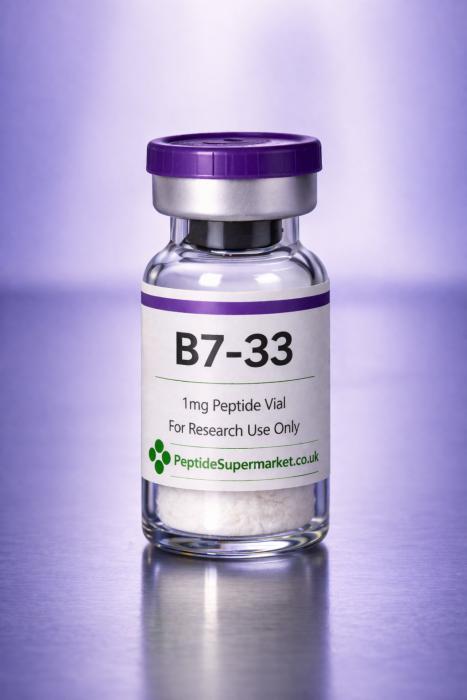
Kidney fibrosis is one of the most important processes in chronic kidney disease because it reflects a deeper structural problem, not just a fluctuation in blood markers. As fibrosis progresses, healthy tissue is gradually replaced by dense extracellular matrix and scar-like material, making the kidney stiffer, less well perfused and less able to function normally.
That is why interest in anti-fibrotic research remains so high. Among the peptides now discussed in this space, B7-33 stands out as one of the more intriguing but less widely known candidates.
Why fibrosis matters so much in kidney disease
Fibrosis is often described as the end result of prolonged tissue stress. In the kidney, that stress may come from chronic inflammation, vascular injury, diabetes, hypertension, autoimmune activity or long-term oxidative strain. Over time, the normal repair process stops looking like healing and starts looking like remodelling gone wrong.
Once that shift happens, the kidney is no longer just inflamed. It becomes structurally altered. Blood flow may become less efficient, oxygen delivery can worsen and tissue stiffness itself starts to work against recovery.
What B7-33 is usually discussed as
B7-33 is commonly described as a relaxin-related peptide of interest in fibrosis and adverse tissue remodelling. The appeal is not that it has already solved kidney fibrosis, but that it is being explored in a part of biology directly linked to scar formation and tissue stiffness.
If your goal is simply to compare B7-33 prices (UK), use our dedicated comparison page:
In broader peptide discussion, B7-33 is often mentioned because early work around fibrosis and post-injury remodelling has made researchers and clinicians look beyond the heart and towards organs such as the kidney, where microvascular compromise and extracellular matrix build-up are central problems.
That is a promising research position. It is not the same as settled clinical proof.
Why B7-33 gets attention in anti-fibrotic conversations
The main attraction is mechanistic. Kidney fibrosis is not simply a build-up problem. It involves signalling pathways, inflammatory activation, myofibroblast activity, vascular change and the production of excess matrix proteins such as collagen.
B7-33 draws interest because it is discussed in relation to that remodelling process rather than just symptom support. In other words, it sits closer to the architecture of tissue decline than to general wellness language.
This is also why it tends to be discussed cautiously by people who know the field well. A peptide can be biologically compelling and still remain early-stage in practical use.
Why one peptide is never the whole picture
A useful kidney fibrosis article should never make B7-33 sound like a one-step solution. Fibrosis usually develops because several systems have been under pressure at once.
Inflammation matters. Oxidative stress matters. Mitochondrial strain matters. Vascular health matters. In metabolic disease, glucose handling matters too. That is why broader anti-fibrotic discussions often include other peptide categories as well, such as mitochondrial-support peptides, immune-modulating peptides and metabolically targeted therapies.
B7-33 may be one part of that conversation, but it is rarely the whole conversation.
Want to compare B7-33 prices in the UK? See our B7-33 price comparison page here:
Why careful framing is essential
This is especially important in kidney health content, where the temptation to use dramatic language is high. Fibrosis is a serious process, and readers understandably want hope. But good editorial practice means describing B7-33 as a peptide being explored in relation to fibrosis, not as a guaranteed way to restore kidney tissue.
That distinction protects clarity. It also respects the fact that chronic kidney disease is not one condition with one driver.
A note for readers comparing peptide options
Readers exploring peptides uk should keep in mind that compounds discussed for renal fibrosis remain highly specialised and often experimental. Anyone trying to buy peptides uk or decide where to buy peptides should be especially cautious around cheap peptides language in a category this complex. A peptide supplied uk source should make the research status and product identity clear rather than hiding behind hype.
Final thoughts
B7-33 is interesting because it enters the kidney conversation at the level of tissue remodelling, which is where fibrosis becomes hard to ignore and harder to reverse. That alone makes it worth watching.
But the strongest way to present it is with restraint. B7-33 is a peptide drawing attention in early anti-fibrotic discussion, not a simple answer to chronic kidney disease.
Compare B7-33 prices across the UK
Side-by-side prices from every trusted UK supplier stocking B7-33.


