Health isn’t a mystery — it’s three failures
You’ve been told health is complex, disease is inevitable, and the only hope is surgery or lab chemistry.
Garbage.
Most chronic disease—the stuff that slowly ruins your life—stems from the same three failures:
Systemic inflammation
Your body’s emergency alarm is stuck in the ON position.Insulin resistance
Your cells go deaf to the master hormone that tells them to take in fuel.Chronic ATP shortage
Your mitochondria—the power plants—are failing, and you’re running on fumes.
Solve these three and you don’t just treat disease—you prevent it, reverse it, and you make your body inhospitable to pathology. You’re designed this way. You’ve just been taught that you’re not.
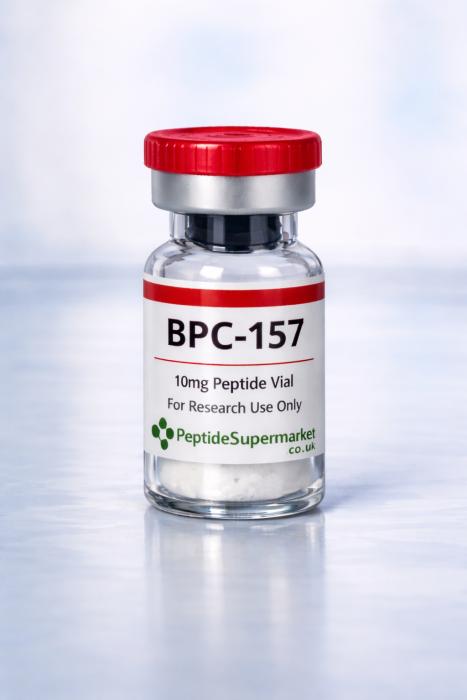
What BPC-157 actually is
BPC-157 = Body Protecting Compound 157.
It’s a 15–amino acid peptide sequence found naturally in human gastric juices. Your stomach makes it.
Think about that for a second: the most corrosive environment in your body—this vat of hydrochloric acid designed to dissolve food—produces something that protects and repairs. That’s not science fiction. That’s physiology.
BPC-157 is a native signaling molecule your body already uses to heal from daily wear and tear. Its core job is cytoprotection—cell protection. It’s your built-in repair crew.
And this is the part people miss:
BPC doesn’t do one thing. It does all the things—because its job description is systemic repair.
Stop getting cute with delivery: subQ only
I’m going to make this simple:
BPC-157 works subQ. Period.
Oral? No.
Nasal? No.
Everything else? Bro-science sales mumbo-jumbo.
You can argue all you want. You can say it “worked” for you. No, it didn’t. That’s not how biology works.
Proteolytic enzymes demolish it. Hydrochloric acid cleaves it. The liver shreds what survives. That’s how the system is designed. You don’t take a steak, throw it into a wood chipper, and expect a cow to come out the other end.
If you want BPC-157 to work, use the method that actually works.
If your goal is simply to compare BPC-157 prices (UK), use our dedicated comparison page:
The core mechanism: the nitric oxide pathway
If you understand one thing about BPC-157, understand this:
The key is nitric oxide signaling.
Nitric oxide is a gasotransmitter—a signaling molecule—and it has two faces:
eNOS (endothelial nitric oxide synthase)
The good guy. Relaxes blood vessels, improves blood flow, supports healing.iNOS (inducible nitric oxide synthase)
The bad guy when it’s chronically active. Produces damaging levels of nitric oxide during inflammation and drives tissue destruction.
The genius of BPC-157 is its selectivity.
It promotes eNOS activity while suppressing excessive iNOS expression. It routes the healing response down the right path so you get the right results.
And when eNOS turns on, the cascade is ridiculous:
improved blood flow (more oxygen + nutrients to damaged tissue)
waste and toxins cleared from those tissues
growth hormone receptor upregulation (cells become more responsive to repair signals)
angiogenesis (new blood vessels) to rebuild supply lines
key regenerative gene signaling (like VEGFR2) ramps up
In short:
BPC-157 takes a system stuck in an inflammatory breakdown loop and reboots it.
It flips the master switch from breakdown → rebuild.
BPC-157 and the three failures
1) Systemic inflammation
BPC-157 is a potent anti-inflammatory—but not like an NSAID that blocks one narrow pathway.
It works upstream, calming the entire inflammatory cascade at the root:
reduces pro-inflammatory cytokines like TNF-alpha
modulates inflammatory signaling like NF-kappa B
stabilizes nitric oxide signaling so you don’t keep shredding tissue
2) Insulin resistance
If you’ve listened to me at all, you already know the truth:
Shut down inflammation and insulin resistance starts resolving.
Insulin resistance is a signaling problem driven by inflammation. When BPC reduces systemic inflammation and improves blood flow, cells can “hear” insulin again and fuel can actually move.
3) ATP shortage
Inflammation and poor blood flow damage mitochondria. That’s how you end up energy bankrupt.
BPC-157 restores blood flow and reduces oxidative stress, creating an environment where mitochondria can function properly again.
More oxygen + less damage = more ATP. It’s not complicated.
Organ-by-organ: what BPC-157 has been shown to do
BPC-157 isn’t “a tendon peptide.” That’s amateur hour.
This thing is systemic.
Cardiovascular damage and fibrosis
After a heart attack, scar tissue forms (fibrosis) and weakens heart muscle. BPC-157 has been shown to support:
reduced infarct size
improved heart function and ejection fraction
reduced fibrosis
Mechanism: angiogenesis + healing modulation that favors regeneration over scarring.
Liver protection
Your liver is your detox center. It gets hammered by toxins and chronic inflammation. BPC-157 has been shown to produce near complete resistance to toxin-induced liver damage by:
upregulating cytoprotective pathways
regulating eNOS/iNOS balance
reducing inflammatory cell death (apoptosis driven by inflammatory signaling)
Kidney protection
Kidney filtration structures are delicate and easily damaged by toxins and poor blood flow. BPC-157 has been shown to:
normalize kidney function
counteract blood pressure collapse
restore renal blood flow
protect glomerular filtration integrity
Neurological repair
This is the one people don’t want to believe:
Your brain and spinal cord can heal.
BPC-157 has been shown to support nerve regeneration and motor recovery after severe injury by:
protecting neurons from death
promoting axon outgrowth
creating a pro-healing CNS environment
Tendon, muscle, ligament repair
This is where BPC-157 is studied the most, and the results are wild:
stronger tendon repair
better collagen organization
faster functional recovery
repair that can become indistinguishable from the uninjured side
It doesn’t just speed healing—it drives a stronger rebuild by stimulating fibroblasts and connective tissue construction.
Lung fibrosis
Fibrosis in lung tissue is a brutal problem—scarring that ruins gas exchange. BPC-157 has been shown to:
prevent development of fibrosis
reduce inflammation
improve and reverse existing fibrosis
protect alveolar structure
The cancer fear — kill it completely
“Something that promotes growth must cause cancer.”
No.
Cancer is chaotic, disordered, uncontrolled growth that evades regulation. BPC-157 promotes orderly, controlled healing guided by the body’s regulatory systems.
Here’s the clean way to understand it:
Good healing is a construction crew building a house according to a blueprint.
Cancer is a demolition derby.
BPC-157 empowers the construction crew. It doesn’t start the engines in the derby.
Want to compare BPC-157 prices in the UK? See our BPC-157 price comparison page here:
Longevity: why this belongs in the “forever peptide” conversation
Aging is the accumulation of cellular damage, mitochondrial decline, and chronic systemic inflammation—what people now call “inflammaging.”
Sound familiar? It’s the same three failures again.
BPC-157 counters the hallmarks of aging by:
reducing systemic inflammation
protecting mitochondria
enhancing blood flow to organs
promoting systemic repair signaling
You’re not stopping the clock. That’s not the point.
But if you can’t touch your toes, sprint with your kid, or move like you’re supposed to at 45, that’s not “normal.” That’s a system that’s breaking down.
BPC-157 doesn’t just add years to your life. It adds life to your years.
The stack: how to take the foundation and build the skyscraper
BPC-157 is the master foreman. It secures the site, restores blood supply, and flips your physiology into rebuild mode.
But if you want to turn “reboot” into “overdrive,” you build the crew around it—on purpose, not with random bro-science guessing.
TB-500: structural repair crew
TB-500 is about structural repair—actin dynamics, cell migration, tissue remodeling.
BPC-157 preps the site with blood flow. TB-500 floods the site with the construction crew and scaffolding.
KPV: molecular fire extinguisher
KPV is a tiny tripeptide that functions like a targeted fire extinguisher for the hottest inflammatory fires.
BPC manages the broad nitric oxide environment. KPV is the spec ops unit shutting down the worst inflammation so rebuilding can happen unobstructed.
Because the gatekeeper to everything in your life going well is always the same:
Inflammation.
GHK-Cu: quality control and tissue remodeling
GHK-Cu is tissue remodeling and quality control:
collagen, elastin, glycosaminoglycans
vascular support
neural protection
It helps ensure the rebuilt tissue isn’t just “there,” but high quality, functional, and well supplied.
Tesamorelin + Ipamorelin: the project managers
These don’t “replace” growth hormone. They signal your pituitary to produce its own growth hormone in a natural rhythm.
Think of it like this:
tesamorelin fills the reservoir
ipamorelin opens the gates
Now your entire repair economy runs better—because growth hormone is a systemic command signal for repair and regeneration.
The point: this is multiplicative
This isn’t additive. This isn’t “one on top of the other.”
It’s a biochemical symphony:
BPC-157 secures the site and restores blood supply
KPV puts out the inflammatory fires
TB-500 brings structural scaffolding and repair migration
GHK-Cu ensures quality control and functional remodeling
Tesamorelin + Ipamorelin amplify the entire repair economy
You’re not just healing a tendon.
You’re orchestrating a full-system, youth-restoring regeneration event from the cellular level up.
That’s how you win.
Compare BPC-157 prices across the UK
Side-by-side prices from every trusted UK supplier stocking BPC-157.


