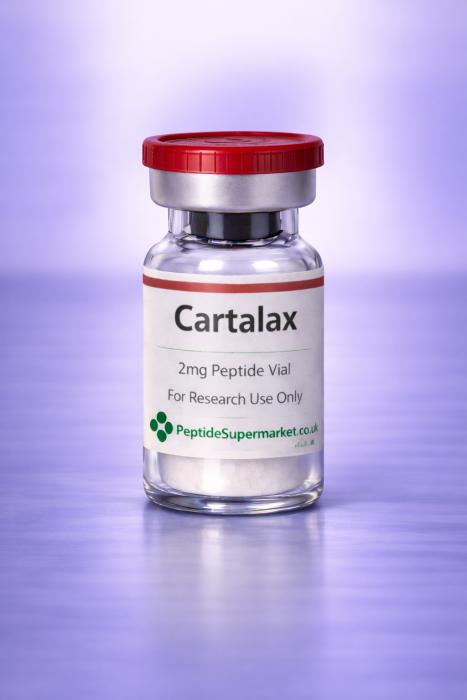
Some peptides attract attention because they are tied to a visible outcome. Cartilax is one of them. It is often discussed in relation to cartilage support, joint comfort and tissue repair, which immediately makes it relevant to osteoarthritis and age-related wear-and-tear conversations.
What makes it especially interesting, though, is not just the joint angle. It is the way it is discussed around collagen turnover, IGF-1 signalling and extracellular matrix protection.
Why cartilage turnover matters
Cartilage is not inert. It is maintained through a balance of production, repair and breakdown. Chondrocytes help build and maintain this environment, while matrix proteins and water balance help joints absorb load and move smoothly.
When that balance shifts in the wrong direction, the result is not only structural decline. It is also inflammation, swelling and worsening discomfort.
This is why any peptide discussed for cartilage support tends to be judged on two fronts at once: whether it may support rebuilding, and whether it may slow breakdown.
How Cartilax is usually discussed mechanistically
Cartilax is often described as influencing pathways tied to tissue repair and extracellular matrix integrity. In the material provided, it was linked to increased IGF-1 signalling, mTOR-related repair activity, collagen type I support and reduced MMP-9 activity.
To compare Cartilax prices across UK listings, head over to our comparison hub:
That combination is one reason it stands out. IGF-1 is frequently discussed in relation to tissue renewal and collagen formation, while MMP-9 is associated with matrix breakdown. A peptide discussed as nudging both sides of that balance in a favourable direction is naturally going to attract interest.
Why the IGF-1 conversation gets more nuanced here
One of the more distinctive claims around Cartilax is that it is discussed as supporting both IGF-1 and SIRT6-related pathways. That is part of what gives it a different flavour from simpler “more growth equals better repair” narratives.
The implication in this discussion is that Cartilax may sit in a more balanced tissue-support conversation rather than a blunt growth-signal one. That does not prove superiority, but it does help explain why people see it as more sophisticated than a direct, one-dimensional repair story.
Collagen, matrix protection and joint ageing
Cartilage decline is not just about what fails to rebuild. It is also about what gets broken down too quickly. That is why matrix-degrading enzymes keep showing up in the conversation.
Cartilax is often discussed as helping protect extracellular matrix structure while also supporting regenerative pathways. Taken together, that gives it a place in broader conversations around joint ageing, cartilage maintenance and even visible skin quality, where collagen-related pathways are also relevant.
That said, a mechanism-heavy discussion should never be mistaken for a guaranteed outcome in every real person.
Pricing for Cartilax can vary, so we’ve put together a UK price comparison hub here:
Why this still comes back to symptoms
Collagen and growth-signalling language can make a peptide sound extremely advanced, but patients and readers usually still judge results by more basic standards: less pain, better movement and more confidence in the joint.
That is why Cartilax only makes sense as a serious article topic when the mechanistic discussion stays tied to function. Otherwise it becomes biochemical theatre.
Final thoughts
Cartilax gets attention because it is discussed at the level of cartilage biology, collagen turnover and tissue-repair signalling, not just surface-level symptom management. That makes it more interesting than a generic joint-support claim.
For readers exploring peptides uk or trying to work out where to buy peptides, this is also a reminder that mechanism claims should never replace product clarity. Cheap peptides can look appealing, but any peptide supplied uk source should be able to explain what the product is, what is known about it and what still remains uncertain.
Compare Cartalax prices across the UK
Side-by-side prices from every trusted UK supplier stocking Cartalax.


