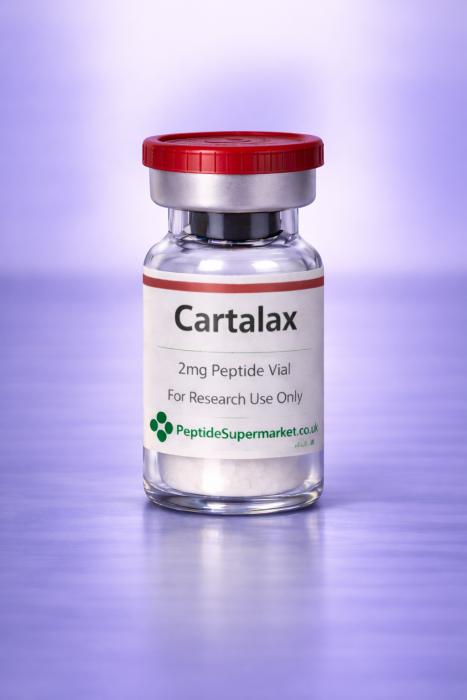
Cartalax is often presented as a tripeptide associated with cartilage and bone support, particularly in discussions around osteoarthritis and age-related joint decline. The appeal is easy to understand. A compound linked to cartilage tissue, joint comfort and mobility will always attract attention, especially when everyday movement has already become painful.
The stronger way to read it, however, is not as a miracle joint fix. It is as a peptide discussed in relation to cartilage maintenance, extracellular matrix support and inflammatory signalling that may shape how joints feel and function over time.
Why joint pain is not only about cartilage loss
Joint pain is often treated as though it simply reflects worn cartilage. In reality, the picture is broader. Swelling, inflammatory signals and sensitised nerves can all make a joint feel worse than imaging alone might suggest.
That matters because a useful joint-support peptide would ideally do more than sit in a cartilage conversation. It would also need to be discussed in relation to inflammation, tissue turnover and the way pain is actually experienced.
This is part of what makes Cartalax interesting in the first place.
We’ve added Cartalax to our UK price comparison hub so you can compare the different price points easily:
What Cartalax is usually discussed as
Cartalax is commonly described as a short peptide bioregulator linked to cartilage and bone tissue. In the material provided, it was framed as being discussed for osteoarthritis of the knee and spine, with a particular emphasis on pain reduction and improved joint mobility rather than imaging changes alone.
That is a sensible emphasis. People care about scans, but they care more about whether they can move more comfortably, live with less pain and regain function.
The discussion also referenced human data in which many participants with knee osteoarthritis and over half of those with spinal osteochondrosis reportedly experienced improvements in symptoms and mobility, with smaller structural improvements also noted.
How the mechanism is usually framed
Preclinical and mechanistic discussions often focus on Cartalax as a peptide linked to chondrocytes, extracellular matrix balance and the processes that shape cartilage turnover.
That includes discussion around collagen production, proteoglycan support and the regulation of cartilage breakdown. It is also often linked to pathways involving IGF-1, mTOR-related tissue repair signalling, and reduced activity of enzymes such as MMP-9 that are associated with matrix degradation.
Another reason it attracts interest is that it is sometimes described as supporting IGF-1 and SIRT6-related pathways at the same time. In peptide discussion, that combination is often framed as unusual and worth paying attention to, particularly where tissue maintenance and regenerative capacity are concerned.
Why pain and mobility still matter most
Mechanistic language can sound impressive, but joint-health readers usually want to know one thing first: does it help people feel and move better?
Quick link: UK Cartalax price comparison (compare listings and pricing in one place):
That is where Cartalax gains some of its credibility in discussion. It is not only framed as a cartilage-support peptide. It is also described in relation to pain and movement, which are the outcomes that matter most in day-to-day life.
Still, that does not mean it should be overstated. Pain improvement and mobility support are meaningful discussions. They are not guarantees.
The limits worth keeping in view
A narrower evidence base is still a narrower evidence base, even when the findings sound promising. Cartalax may be discussed in relation to osteoarthritis support, but it is not a licence to ignore the basics of joint care.
Movement quality, body weight, inflammation, strength and rehabilitation still shape outcomes. A peptide can be part of that conversation without replacing it.
That is especially important in joint-health content, where enthusiasm can quickly outrun caution.
Final thoughts
Cartalax is best understood as a peptide discussed in relation to cartilage support, extracellular matrix balance and the broader symptom picture of joint pain and mobility. That makes it interesting, but it also means expectations should stay grounded.
For readers comparing peptides uk options or wondering where to buy peptides, this is a category where documentation matters more than hype. Cheap peptides are not much value if identity and handling are unclear, and any peptide supplied uk source should explain both the promise and the limits.
Compare Cartalax prices across the UK
Side-by-side prices from every trusted UK supplier stocking Cartalax.


