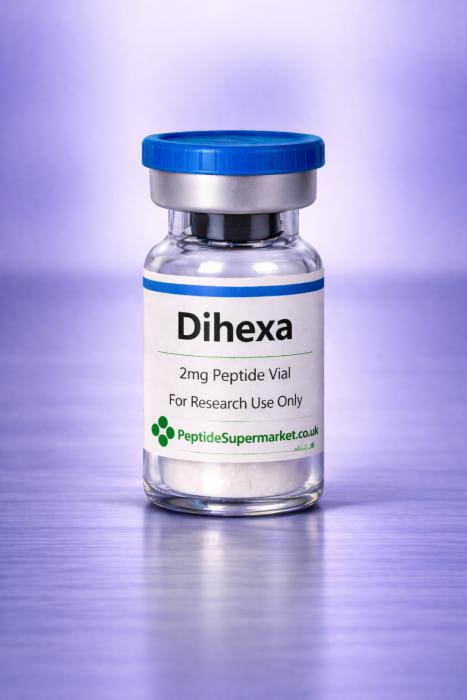
The reason Dihexa sounds so different from many nootropics is that the discussion around it starts with neuroplasticity, not stimulation. Most compounds in the cognitive space are judged by how quickly they sharpen focus or wake someone up. Dihexa is usually discussed in a much more structural way.
That is why terms like c-Met, dendritic spines and synaptic density come up so often whenever people try to explain what makes it unusual.
Why c-Met matters in the Dihexa discussion
Dihexa is commonly described as interacting with pathways linked to the c-Met receptor. In research language, that matters because c-Met signalling is often associated with neuronal growth, differentiation and synaptic adaptation.
This is the part of the Dihexa story that gives it its long-term reputation. Rather than being framed as a temporary brain boost, it is discussed as a peptide that may influence the architecture of learning itself.
Synaptic density and dendritic spines
Two of the most repeated ideas around Dihexa are increased synaptic density and stronger dendritic spine formation. These are both ways of describing how neurons connect, communicate and strengthen learning pathways over time.
Looking to compare Dihexa prices (UK)? Our price comparison hub puts the listings in one place:
That is why the peptide is often presented as relevant to memory acquisition and consolidation. If a compound is being discussed in relation to stronger or denser synaptic connections, then improved learning and recall become the natural claims that follow.
The key word, however, is discussed. These are mechanistic and early research conversations, not blanket promises for every user.
Why it is often compared with BDNF
Dihexa also attracts interest because some discussions place it beside brain-derived neurotrophic factor, or BDNF. In peptide culture, any comparison with BDNF immediately raises expectations because BDNF already holds such a strong place in the language of brain health and learning.
That helps explain the excitement, but it also increases the need for caution. Mechanistic comparisons are not the same as proof of clinical superiority.
Why blood-brain barrier access changes the tone
Another reason Dihexa is framed as a serious cognitive peptide is its reported ability to cross the blood-brain barrier. In practice, that means it is often discussed as reaching the areas where the most relevant neuroplastic effects would need to happen.
That alone can make the compound sound more sophisticated than other nootropics. It also helps explain why users and commentators often talk about it in terms of brain access rather than simple stimulation.
The appeal of long-term change
One of the most attractive parts of the Dihexa discussion is the idea of durability. A stimulant can help someone feel more switched on for a few hours. A neuroplasticity peptide is usually framed as doing something slower but more meaningful.
If you’re researching Dihexa and want to compare peptide prices in the UK, start here:
That is exactly why Dihexa continues to interest people focused on learning, ageing and resilience. It is usually described as a compound that may support how the brain adapts, not just how it performs in the next moment.
Why the evidence still needs perspective
A strong mechanism can make a peptide sound almost inevitable, but biology rarely works that neatly. Dihexa may be tied to elegant pathways, yet the jump from interesting mechanism to established real-world use is still a large one.
That is especially important when it begins to appear in conversations around neurodegeneration, psychiatric strain or brain injury. The mechanistic case may be compelling. The clinical story remains more limited and more careful.
Final thoughts
Dihexa stands out because it is discussed in the language of brain structure and adaptation rather than quick stimulation. c-Met signalling, synaptic density and dendritic spine formation all help explain why.
For readers exploring peptides uk, that makes Dihexa a compound that deserves calm interpretation. Anyone trying to buy peptides uk or decide where to buy peptides should be wary of cheap peptides marketing that treats a complex neuroplasticity peptide like a simple productivity product. A peptide supplied uk source should explain both the mechanism and the uncertainty.
Compare Dihexa prices across the UK
Side-by-side prices from every trusted UK supplier stocking Dihexa.


