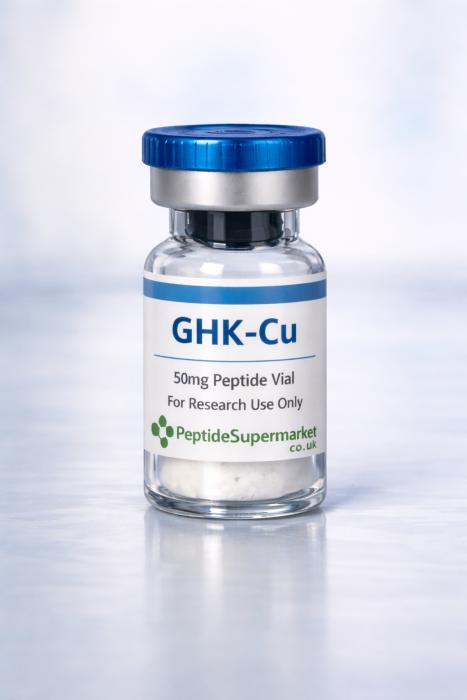
The Power of Copper in Health
Copper isn’t some gentle “nice-to-have” supplement. It’s fundamental. It’s structural. It’s one of the core signals your biology uses to build—and keep—youthful function.
And the form that matters here is GHK-Cu.
Not because it’s trendy. Because it’s information your body recognizes instantly.
What Copper Is (GHK-Cu)
GHK-Cu is a tripeptide—three amino acids:
Glycine
Histidine
Lysine
…with a single copper ion bound in the center.
That’s it.
But that simple structure acts like a key in a lock, and the lock is your gene-control machinery—the part of you that decides what gets repaired, what gets rebuilt, what gets regenerated, and what gets ignored.
Copper’s Role in Youth and Aging
Think of your DNA like a massive library of blueprints.
A library is useless without a librarian.
When you’re young, the “librarians” are active—pulling the right blueprints at the right time to keep collagen strong, tissue responsive, inflammation controlled, and repair running fast.
As you age, that system gets quiet. Not because your DNA disappears, but because the signal that coordinates it fades.
GHK-Cu functions like the head librarian—the master coordinator that walks in, flips the lights on, and tells the system:
Pull the repair blueprints.
Run the regeneration programs.
Turn youth-function back on.
This is why copper isn’t cosmetic. It’s not “anti-wrinkle.” It’s anti-decay at the signal level.
What Copper Actually Does in the Body
1) It turns on gene programs for repair and regeneration
GHK-Cu influences transcription—gene activation—especially in pathways tied to:
tissue regeneration
antioxidant defense
wound healing
extracellular matrix rebuilding
This isn’t a suggestion. It’s a command signal that shifts the entire system toward reconstruction.
2) It drives collagen and extracellular matrix rebuilding
Copper influences the production of structural components like:
collagen
glycosaminoglycans
other extracellular matrix components that form the scaffolding of tissue
It tells fibroblasts—your builders—to start producing the materials that make you structurally resilient again.
For a UK-only GHK-Cu price comparison (so you can quickly compare listings), use our hub:
3) It increases mitochondrial production
Copper doesn’t just help tissue structure. It upgrades cellular energy capacity by increasing mitochondrial production.
More mitochondria means:
better recovery
sharper cognition
stronger stress tolerance
higher-output cellular performance across the board
Energy is the currency your body uses for everything. Copper raises the voltage.
4) It supercharges antioxidant defense through SOD
The copper ion is a cofactor for superoxide dismutase (SOD)—one of your most important endogenous antioxidant systems.
That means copper doesn’t “mop up a few free radicals.”
It upgrades the industrial-scale defense network your body already uses to control oxidative damage.
5) It suppresses destructive inflammatory signaling
Copper helps dial down key inflammatory cytokines like:
TNF-α
IL-6
Not by shutting healing down, but by preventing the chronic inflammatory loop that keeps tissue stuck in breakdown.
Copper and Cardiovascular Integrity
Copper is essential for vascular structure.
It’s required for lysyl oxidase, the enzyme that cross-links collagen and elastin—the rebar and elastic bands inside your arterial walls.
When copper status drops with age, arterial architecture loses integrity:
vessels stiffen
flexibility drops
function degrades
pressure regulation gets worse
Restoring copper signaling supports the physical architecture that keeps arteries supple, functional, and durable—which matters for longevity because perfusion is life: oxygen and nutrients in, waste out.
Copper and Joint Degeneration
Osteoarthritis isn’t just “worn cartilage.”
It’s a breakdown of the joint’s entire micro-environment:
synovial fluid becomes inflammatory
chondrocytes become dysfunctional
extracellular matrix collapses
Copper shifts that environment by turning down the master inflammation switch (NF-κB behavior) while upregulating structural rebuilding signals (collagen/elastin matrix components).
It’s not just pain relief. It’s a signal for architectural reconstruction.
Copper and Diabetic Ulcers
Diabetic ulcers aren’t “sores.” They’re a catastrophic failure of the wound-healing cascade:
high glucose drives oxidative stress
repair cells become senescent
inflammation stays stuck “on”
perfusion is poor
Copper acts like a conductor that restarts the wound-healing orchestra:
supports angiogenesis where oxygen delivery is failing
reactivates fibroblast productivity
rebuilds collagen structure
reboots a failed local healing program
It’s not “closing a wound.” It’s restoring the system that knows how to close wounds.
Copper and Neurodegeneration
Neurodegeneration is an energy + inflammation problem:
microglia stay chronically activated
cytokines damage neurons over time
mitochondria produce less ATP and more ROS
Copper supports neuronal defense by enhancing antioxidant capacity—especially through SOD—and promotes neurite outgrowth and network repair signaling.
It doesn’t just protect neurons from rust.
It pushes the brain toward rewiring and rebuilding.
Copper and Liver Fibrosis
Under chronic stress, the liver shifts toward scar production:
stellate cells activate
collagen deposition rises
functional tissue gets choked out
Copper signaling opposes pro-fibrotic momentum (the context-dependent TGF-β behavior) and shifts the liver’s priority back toward regeneration of healthy hepatocytes instead of progressive scarring.
It’s not a detox product.
It’s a rebuild directive for the organ that handles detox.
Copper and Post-Workout Recovery
Training causes micro-tears. That’s normal.
The aging problem is the inflammatory response becomes:
exaggerated
prolonged
destructive
Copper is an immunomodulator. It helps shift inflammation from chaotic destruction to organized repair—so satellite cells can rebuild muscle without wading through a cytokine swamp that delays recovery and increases collateral damage.
It doesn’t suppress the response.
It orchestrates it.
Before you buy GHK-Cu, it’s worth checking a UK price comparison first. We keep a running list here:
Proper Use: Don’t Mix Copper With Other Peptides
This is chemistry, not preference.
The copper ion is reactive. It can catalyze oxidation and degrade fragile peptides—especially things like BPC-157 and similar structures—before they ever get a chance to do anything.
Use GHK-Cu alone.
If you’re using other peptides, space them apart (15–30 minutes is a clean, practical buffer) and keep your compounds intact instead of turning them into broken fragments in the syringe.
Copper and Cycling
Copper isn’t a “cycle-only” peptide.
It’s replacing a signal that declines with age. This is restoration of deficiency, not a short-term stunt.
The goal is consistent baseline signaling—because aging isn’t cyclical, and the systems copper supports aren’t optional.
The Bottom Line
GHK-Cu isn’t cosmetic. It isn’t surface-level. It isn’t a trend.
It’s a master signal that:
turns on repair gene programs
rebuilds collagen and extracellular matrix
increases mitochondrial capacity
upgrades antioxidant defense
calms destructive inflammation
strengthens vascular architecture
supports joints, wounds, brain, liver, and recovery
Copper isn’t medicine.
It’s information—and your body runs on information.
Compare GHK-Cu prices across the UK
Side-by-side prices from every trusted UK supplier stocking GHK-Cu.


