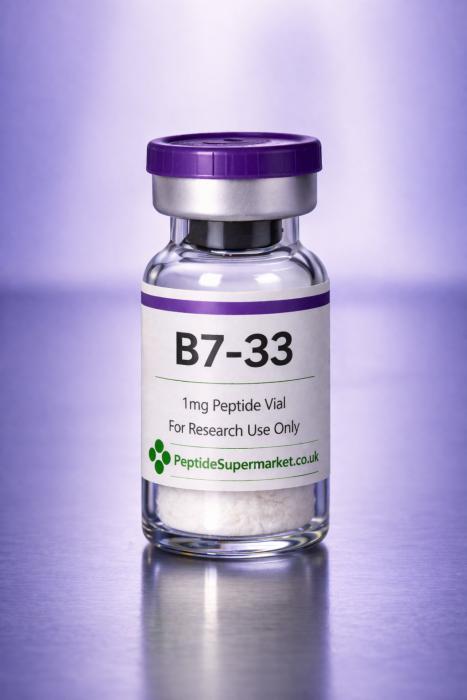
When chronic kidney disease progresses, the problem is not only declining filtration. It is also the gradual remodelling of kidney tissue itself. That remodelling often takes the form of fibrosis, a process in which excess extracellular matrix builds up and normal tissue becomes denser, stiffer and less functional.
This is the background that makes B7-33 interesting. It is not being discussed because it is famous. It is being discussed because fibrosis sits near the centre of long-term renal damage.
Fibrosis is more than ordinary scarring
The simplest description of fibrosis is excess tissue repair. The body responds to injury, but instead of restoring a healthier version of the original tissue, it lays down too much structural material and begins to distort the organ itself.
In the kidney, that matters immediately. A fibrotic kidney becomes harder to perfuse properly, less efficient at oxygen exchange and less able to maintain normal cellular metabolism.
This is one reason fibrosis is often treated as a major turning point in chronic kidney disease rather than a minor detail.
For a UK-only B7-33 price comparison (so you can quickly compare listings), use our hub:
What drives kidney fibrosis
The transcript material pointed to several overlapping drivers, and that broader picture is worth keeping.
Chronic inflammation is one. Oxidative stress is another. Changes in the microvasculature can worsen the oxygen problem. Immune-cell activity can stay switched on longer than it should. Signalling pathways linked to growth factors and matrix production can continue to push tissue in the wrong direction.
Over time, cells involved in normal support and lining functions may shift towards a more fibrotic phenotype, contributing to further collagen deposition and structural decline.
Where B7-33 fits in
B7-33 is often discussed because it appears relevant to adverse tissue remodelling, especially in contexts where scar formation is part of the pathology. Its appeal in kidney conversations comes from the idea that renal fibrosis is not just a by-product of decline, but one of the engines driving it.
That does not mean the evidence is complete. It means the biological direction is compelling enough to warrant serious interest.
In a field full of generic peptide marketing, B7-33 stands out because the discussion around it is tied to a very specific pathological target.
Why the conversation quickly widens beyond B7-33
Fibrosis does not happen in isolation, so the peptide discussion rarely stays limited to one compound. Mitochondrial stress, immune dysregulation, chronic metabolic strain and vascular compromise all shape the same outcome.
That is why people discussing renal fibrosis often mention other peptide categories as well. Mitochondrial peptides, immune-modulating peptides and metabolic peptides may all appear in the same conversation, even if B7-33 is the headline compound.
Before you buy B7-33, it’s worth checking a UK price comparison first. We keep a running list here:
This broader framing is useful because it reflects the disease process more honestly.
Why the underlying driver still matters most
A fibrotic kidney in longstanding diabetes is not the same as a fibrotic kidney shaped mainly by autoimmune inflammation, vascular compromise or post-infectious injury. The tissue may look similar in the end, but the route into that damage is not always the same.
That is why sensible peptide discussion should always start with the underlying driver, not just the final scar tissue.
A practical note on sourcing and hype
Readers following peptides uk content should be especially careful with compounds discussed for kidney fibrosis. Anyone asking where to buy peptides or planning to buy peptides uk should expect far more than a dramatic product page. Cheap peptides are not reassuring in a category built around complexity and early research. A peptide supplied uk source should prioritise documentation, clarity and restraint.
Final thoughts
B7-33 is being discussed because kidney fibrosis is one of the most consequential parts of chronic kidney disease, and because anti-fibrotic biology remains one of the most important frontiers in renal care.
That makes B7-33 worth understanding. It also makes careful wording essential. It belongs in an informed research conversation, not in the overpromised language that often surrounds experimental peptides.
Compare B7-33 prices across the UK
Side-by-side prices from every trusted UK supplier stocking B7-33.


