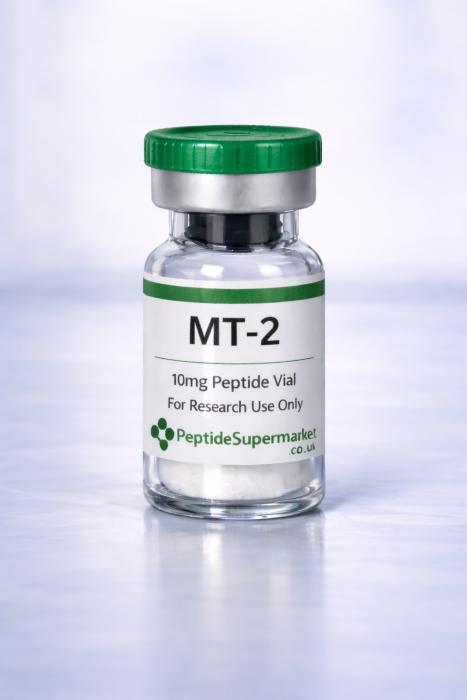
Melanotan II (MT2) — what it really is and what it actually does
Quick take
Melanotan II isn’t “a tanning peptide.” It’s a synthetic analog of α-MSH (alpha-melanocyte stimulating hormone) that activates melanocortin receptors across the body. Pigmentation and libido are real effects—just not the whole story. The real story is system-wide melanocortin signaling that intersects with inflammation control, metabolic regulation, and cellular energy output.
What MT2 is
MT2 = α-MSH analog
It binds melanocortin receptors (not just one), which is why it can influence multiple organ systems at the same time.
The key misconception is treating it like a single-purpose cosmetic compound. It’s a regulatory neuropeptide signaling molecule.
The melanocortin receptors (why this isn’t just about skin)
Most people only think about MC1 (melanocytes → melanin). But the melanocortin system includes receptors distributed widely:
MC1: melanocytes → pigmentation
MC3 / MC4: appetite, metabolic regulation, sympathetic tone
MC receptors in immune cells: cytokine modulation, immune balance
MC receptors in endothelium, kidneys, myocardium, CNS: vascular tone, filtration physiology, neuroinflammatory signaling
When MT2 hits this system, it’s not “targeting a body part.” It’s pressing on a control network.
The three core failure points it targets
Everything funnels through three failure states:
Systemic inflammation
Insulin resistance / metabolic dysfunction
ATP shortage / mitochondrial dysfunction
MT2 is positioned as a single lever that can influence all three via melanocortin pathway activation.
1) Systemic inflammation — turning down the inflammatory amplifier
Central control (POMC → inflammatory brake)
MT2 stimulates POMC-related signaling in the hypothalamic control network.
A key downstream effect described is suppression of NF-κB, treated here as a master switch for chronic inflammatory signaling.
Peripheral immune effects (macrophages / dendritic cells)
MT2 stimulation at melanocortin receptors on immune cells shifts immune balance:
away from TH1 / TH17 dominance (pro-inflammatory)
toward TH2 / T-reg activity (regulatory/anti-inflammatory)
Downstream effect: reduced production of major pro-inflammatory cytokines (the usual suspects referenced: TNF-α, IL-6, IL-1β, IL-17).
Net result as presented: less chronic immune overactivation, less inflammatory damage feeding metabolic dysfunction and tissue decline.
If your goal is simply to compare Melanotan II (MT2) prices (UK), use our dedicated comparison page:
2) Metabolic regulation — appetite, fuel partitioning, and insulin signaling
Appetite / hypothalamic control
MT2 is framed as engaging hypothalamic melanocortin signaling (especially MC4) that influences appetite and energy regulation.
AMPK and insulin sensitivity
The pathway is positioned as improving insulin signaling through AMPK activation in muscle/metabolic tissue.
The logic chain described:
less inflammation → cleaner insulin signaling
improved AMPK signaling → better fuel use and metabolic flexibility
reduced lipid congestion in tissue → improved glucose oxidation
The emphasis: not “lowering glucose” as a superficial outcome, but improving the cell’s responsiveness to insulin.
3) Mitochondria + ATP output — energy production comes back online
MT2 is placed as supporting mitochondrial function through three main routes:
Sympathetic tone / metabolic rate
Increased metabolic drive is tied to brown adipose activity and uncoupling protein expression, presented as raising energy expenditure.
Reduced inflammatory load
Lower cytokine burden reduces mitochondrial damage pressure and oxidative strain.
Improved insulin signaling
Better glucose utilization supports mitochondrial ATP generation and lowers the “energy starvation” state in high-demand tissues.
Big picture: improved mitochondrial throughput is framed as restoring the currency of biology—ATP—so downstream systems can function properly again.
Sexual function — why libido and erectile effects show up
MT2 is positioned as working through central arousal circuits plus peripheral vascular biology.
CNS arousal signaling
MT2 stimulates melanocortin receptors in brain regions described as sexual arousal centers (e.g., medial preoptic area and PVN).
Downstream neurotransmitters highlighted: dopamine and oxytocin (motivation/desire circuitry).
Vascular performance (endothelium + smooth muscle)
Reduced systemic inflammation improves endothelial function and nitric-oxide-related vasodilation capacity.
Improved mitochondrial ATP availability in smooth muscle is framed as supporting the energetic cost of maintaining relaxation and function.
Result as presented: sexual function improves because arousal signaling, vascular function, and cellular energy are being supported at the same time.
Neuroinflammation + cognitive function — calming microglia and supporting brain energy
The brain is framed as highly sensitive to inflammatory signaling and energy shortage.
Microglial activation → neuroinflammation
Chronic systemic inflammation pushes microglia into an activated state.
MT2 is positioned as suppressing microglial inflammatory output via melanocortin signaling, reducing neuroinflammatory cytokine pressure.
Neuronal energy and insulin sensitivity
The brain’s function is tied back to ATP availability and neuronal fuel handling.
Improving insulin sensitivity in neural tissue is framed as improving glucose utilization → more stable energy for synaptic function and plasticity.
This is presented as relevant to broad cognitive decline patterns because inflammation + mitochondrial dysfunction are upstream drivers.
Cardiovascular and endothelial function — the “single-layer” control point
Endothelium is treated as the controlling interface for vascular tone, nitric oxide output, inflammation filtering, and clotting regulation.
MT2 is positioned as improving this by:
lowering cytokine-driven endothelial disruption
reducing oxidative stress pressure
improving insulin sensitivity at the endothelial level
improving nitric oxide signaling efficiency
Downstream framing: improved blood flow dynamics, reduced atherogenic signaling pressure, better vascular performance.
Want to compare Melanotan II (MT2) prices in the UK? See our Melanotan II (MT2) price comparison page here:
Kidney function — filtration is energy-dependent
Kidneys are framed as metabolically demanding, inflammation-sensitive organs.
MT2 is positioned as supporting kidney outcomes through:
improved endothelial function within filtration structures
reduced inflammatory infiltration/scarring pressure
improved mitochondrial ATP supply to tubular processes
The takeaway presented: renal function improves when inflammation and mitochondrial energy output improve.
The real point
MT2 is framed as powerful because it doesn’t “treat a symptom.” It presses a system-wide control network:
turn down inflammation
restore insulin sensitivity
restore ATP production capacity
That combination is why it’s framed as showing up across seemingly unrelated systems—skin, appetite, libido, cognition, vascular function, renal function—because those systems all fail along the same three axes.
Practical reality check (kept peptide-specific)
MT2 isn’t selective—melanocortin receptors are widespread, so effects can be widespread.
The mechanism set described is systemic, which is why outcomes can be broad rather than “one target, one effect.”
Compare MT2 prices across the UK
Side-by-side prices from every trusted UK supplier stocking MT2.


