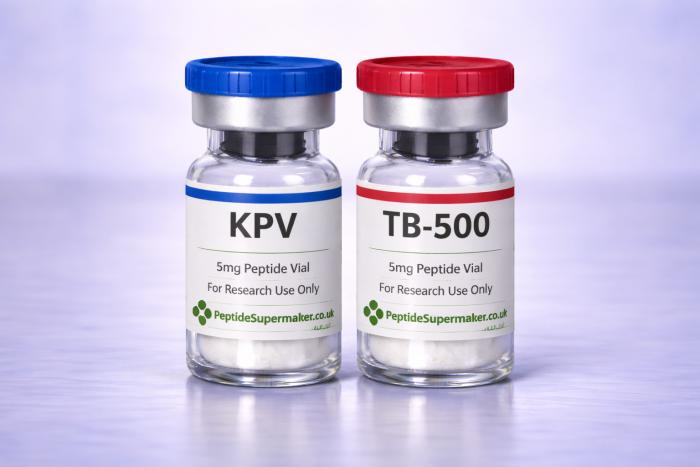
TB-500 is usually introduced as a recovery peptide, but that description only captures part of the interest around it. In more advanced peptide discussions, TB-500 is explored in relation to tissue remodelling, fibrosis and regenerative signalling. That is why it appears so often in conversations about structural recovery rather than just day-to-day inflammation.
When the topic turns to cardiac health, that distinction becomes especially important.
This article is for educational purposes only and is not medical advice.
Why TB-500 is discussed differently from KPV
KPV is typically framed around inflammation and immune regulation. TB-500 is usually framed around what happens after tissue has already been stressed or remodelled.
That is why people often mention the two together but not in the same role. KPV is commonly discussed as helping to calm the environment. TB-500 is more often discussed as supporting the next stage: recovery, repair and functional rebuilding.
In cardiac terms, that usually leads to conversations about fibrosis, impaired tissue quality and whether damaged structures can regain healthier function over time.
The fibrosis discussion
Fibrosis is one of the most important concepts in regenerative peptide conversations. In simple terms, it refers to the replacement of healthy, functional tissue with stiffer scar-like material. That matters because scar tissue does not behave like the tissue it replaces.
When readers discuss cardiac fibrosis, they are often talking about reduced flexibility, poorer conduction or weaker functional performance in affected areas. From that perspective, the interest in TB-500 is not about symptom masking. It is about whether a more repair-oriented signal could help improve the biological setting around damaged tissue.
That remains a research-oriented and highly cautious discussion, but it is the main reason TB-500 keeps appearing in these circles.
To compare TB-500 prices across UK listings, head over to our comparison hub:
Why recovery matters more than symptom management alone
A recurring frustration in regenerative-health communities is the idea that many conventional conversations stop at management. Lower the number. Reduce the symptom. Slow the decline. Those approaches may still have a place, but they are not the same as asking whether tissue quality can improve.
That is where TB-500 attracts attention.
Supporters tend to frame it as part of a regenerative model, where the goal is not simply to cope with damage but to support recovery capacity. In heart-related discussions, that can include interest in remodelling, perfusion, structural resilience and the quality of healing after stress.
Cardiac rhythm and structural health
Another reason TB-500 comes up in advanced discussions is that rhythm problems are not always described as purely electrical. In many peptide conversations, structural health and fibrotic change are treated as part of the wider story.
That makes the discussion more interesting. If tissue becomes less healthy, less flexible or more scarred, then function may suffer as well. From that perspective, recovery-oriented peptides are explored not because they are viewed as quick fixes, but because they are associated with a deeper level of biological support.
This does not make TB-500 an established treatment for rhythm or heart disease. It does explain the interest in it from a tissue-first point of view.
Why TB-500 appeals to regenerative-minded readers
The broader appeal of TB-500 is philosophical as much as practical. Many readers are simply more interested in regeneration than suppression. They want to understand whether the body can be supported in a way that encourages healthier repair rather than long-term compensation.
TB-500 fits neatly into that mindset. It is rarely discussed as a stimulant, and it is not usually positioned as a cosmetic shortcut. Instead, it is explored as a peptide linked to movement, repair and improved tissue adaptability.
That is why it has become such a staple in conversations around injury, recovery and structural support.
Pricing for TB-500 can vary, so we’ve put together a UK price comparison hub here:
The importance of context
One of the most sensible points in the better TB-500 discussions is that repair signalling should not be separated from the wider biological environment. If inflammation is still high, sleep is poor, metabolic health is weak and recovery capacity is compromised, it is harder for any restorative strategy to look its best.
That is why TB-500 is often placed inside a broader foundation-first model. The peptide may be the headline, but the background still matters: food quality, recovery, stress load, inflammation and overall resilience.
Without that context, regenerative language can become hype. With that context, it becomes a more thoughtful conversation.
Choosing quality in the UK market
As interest grows, so does the importance of sourcing. Anyone comparing peptides uk options should think carefully about standards, not just claims. That is especially true for readers searching buy peptides uk, where to buy peptides or peptide supplied uk providers.
Cheap peptides may save money upfront, but unreliable quality creates far more risk than value. For those trying to work out where to buy peptides, the stronger route is to prioritise consistency, testing and a dependable peptide supplied uk standard over pure price chasing.
Final thoughts
TB-500 continues to attract attention because it sits inside a bigger regenerative idea. Rather than being framed only around inflammation or symptom relief, it is often discussed in relation to fibrosis, tissue remodelling and recovery after structural stress.
That makes it one of the more interesting peptides in advanced recovery conversations, especially for readers who want to understand the difference between management and repair.
Compare TB-500 prices across the UK
Side-by-side prices from every trusted UK supplier stocking TB-500.


