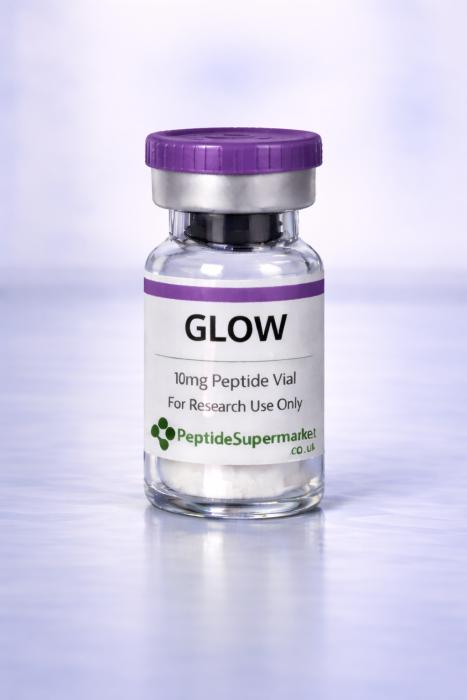
Glow Combo
The 3-Peptide “Healing Glow” Stack for Recovery, Inflammation, and Skin
Quick note: This is not medical advice. I’m not a doctor or a licensed medical professional. This article is for educational and entertainment purposes only. For any health questions or concerns, speak to a licensed professional.
Have you ever dealt with an injury that just won’t heal, no matter how many “treatments” you try? Or maybe you’ve tried protocols that promise hope… but you end up with side effects, partial relief, and you’re still stuck feeling broken and exhausted.
Now imagine a more “biological” approach—one that aims to ignite your body’s own repair signals:
faster recovery
less inflammation
better tissue quality
and yes… that “glow” people talk about (inside and out)
That’s the idea behind the Glow Combo—a popular 3-peptide blend:
BPC-157
TB-500
GHK-Cu
Together, they’re used in research circles as a synergistic healing stack: structural repair + immune support + regeneration + skin/connective tissue benefits.
Let’s break it all down.
What Is This Peptide Combo
The “Glow Combo” usually refers to one vial containing three peptides:
1) BPC-157 (Body Protective Compound)
A peptide associated with repair signaling, often discussed for supporting:
joints and ligaments
muscle and tendon stress
gut tissue (it’s often described as linked to the gastric lining)
brain-gut axis support (in the way people discuss mood, neurotransmitters, and inflammation)
2) TB-500
Often discussed as a peptide linked to cellular movement and repair support, commonly associated with:
tissue regeneration
immune system signaling and cell migration
muscle recovery
and broader “systemic repair” use-cases
3) GHK-Cu (Copper Peptide)
A naturally occurring copper-binding peptide widely known for:
collagen support
skin and hair regeneration
antioxidant protection
and the big headline: it’s often described as influencing hundreds of genes tied to repair and inflammation
That’s the “glow” concept: it’s not just cosmetic—people use the term because the combo aims to support healing and tissue quality everywhere.
How Does It Work
Each peptide plays a different role in the repair ecosystem.
BPC-157: repair signaling + tissue protection
People use it for the idea that it:
activates repair pathways
supports connective tissue recovery
supports blood vessel signaling (angiogenesis comes up a lot in discussions)
interacts with the brain-gut axis (often discussed in relation to neurotransmitters and systemic inflammation)
TB-500: cellular movement + immune support
TB-500 is commonly discussed as helping:
cellular migration (getting the right repair cells to the right place)
tissue regeneration support
immune system coordination during recovery
and faster recovery in muscle-heavy injuries
This is one reason TB-500 and BPC-157 are frequently paired—people treat it as a “core healing duo.”
GHK-Cu: regeneration + collagen + stem-cell signaling
GHK-Cu is usually brought in for:
collagen and connective tissue quality
skin repair and elasticity
antioxidant protection
stem-cell signaling (often discussed as “attracting repair resources to the injury site”)
and broad repair/inflammation gene modulation
The synergy
The Glow Combo gets popular because it’s basically:
repair signaling (BPC-157)
cell migration + systemic recovery support (TB-500)
tissue quality + collagen regeneration (GHK-Cu)
Different levers, same goal: repair faster, heal cleaner, reduce chronic inflammation drag.
Benefits
Each peptide overlaps, but together the Glow Combo is usually discussed for:
faster tissue healing (muscle, tendon, joint stress)
reduced inflammation (especially the lingering, chronic kind)
improved recovery capacity between training sessions
better tissue quality during healing (collagen, skin, connective tissue)
“whole-body” repair signaling (because these are often described as systemic)
A key idea repeated in peptide communities is “the body pulls resources to where it needs them.” So people often describe the combo as working more where the problem is—whether that’s a joint, muscle, gut, or skin.
For a UK-only GLOW Blend price comparison (so you can quickly compare listings), see: Compare peptide prices UK
Cautions & Contraindications
Common cautions people report
water retention
headache
nausea
burning sensation on injection (especially tied to GHK-Cu for some people)
That copper burn is a real “make-or-break” issue for some users. Some feel nothing. Others find it too uncomfortable to continue.
Common contraindications discussed
active infections / acute flare-ups
There’s debate here. Many people feel comfortable using it post-infection or post-flare, but hesitate during an active immune event because it’s unclear how it may interact with an acute situation.cancer history / hormone-sensitive cancers
A general caution in peptide circles is avoiding repair/growth signaling compounds when cancer risk is relevant. This is a “doctor conversation,” not a DIY decision.
Research Dosing & Cycling
Not medical advice — this is a summary of commonly discussed research-style ranges.
Common dosing ranges discussed
BPC-157:
300–800 mcg per dose
TB-500:
300–1,000 mcg per dose
sometimes discussed higher (up to 2,000 mcg) for severe injuries
GHK-Cu:
500–3,000 mcg per dose (0.5mg–3mg)
Splitting doses + “around the area”
People often discuss splitting into two daily doses, and sometimes injecting closer to the problem area (when relevant), though many also treat this as systemic.
Cycle length
commonly daily for 30 days
extended cycles often discussed: 60–120 days
then a break: typically at least 30 days off before resuming
The stated logic is simple: the goal is to heal. If you’ve healed, you don’t keep hammering the signal forever.
Other Peptides To Stack With
Stacking depends on the main goal:
For inflammation control + gut support
KPV (often described as a strong anti-inflammatory add-on)
For nerve pain / neuropathy focus
AR290
For vitality / recovery amplification
a growth hormone stack (examples people discuss):
Mod GRF 1-29 + Ipamorelin
or Tesamorelin + Ipamorelin
For brain recovery focus
Cerebrolysin, Selank, Semax
For immune-focused goals
Thymosin Alpha-1 or LL-37
Supplements To Stack This With
Common add-ons people pair with healing stacks:
collagen or bone broth protein (functional building blocks)
creatine (muscle + brain support)
natural testosterone support (herbal/organ-based approaches are commonly discussed)
NAD+ + glutathione (general cellular support)
Lifestyle Tools
These show up in almost every healing protocol for a reason—they’re the “force multiplier.”
animal-based diet + fasting (often cited for recovery and inflammation control)
corrective training (movement that builds tissue without re-injury)
hot/cold contrast (sauna + cool exposure)
bodywork (lymphatic massage, acupuncture, chiropractic)
oxygen therapy (HBOT is the premium tool people mention most)
Pros
increasingly easy to find as one blended vial
three of the most commonly used “healing” peptides in one place
broad use-cases: joints, muscle, gut, skin, connective tissue
generally viewed as a strong “starter” healing combo with a relatively manageable side-effect profile
Cons
GHK-Cu injection burn can be a dealbreaker for some
can be expensive (3 peptides + often higher doses)
if you react badly, it’s harder to isolate which peptide is responsible when they’re pre-mixed
For a UK-only GLOW Blend price comparison (so you can quickly compare listings), see: Compare peptide prices UK
Compare GLOW Blend prices across the UK
Side-by-side prices from every trusted UK supplier stocking GLOW Blend.


