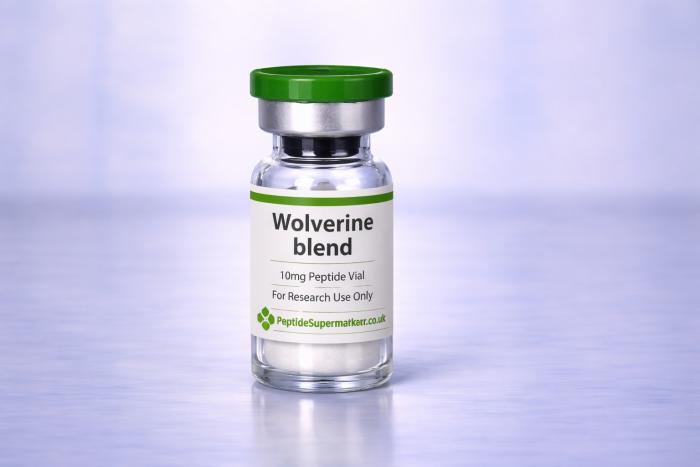
The Wolverine Protocol
The 3-Peptide “Injury Repair” Stack for People Over 35
Quick note: This is not medical advice. I’m not diagnosing, prescribing, or treating anything. Before you put anything into your body, talk to a licensed physician.
If you’re over 35, you already know the pattern. You train hard, you live hard, and sooner or later you end up with constant aches, constant pains, tweaks that don’t go away, old injuries that keep coming back, and the same tired options being pushed at you: rest, meds, months of waiting, and then surgery as the “only” answer.
And the biggest lie people believe is that healing is mostly about time and rest.
Healing is about signals.
Your body doesn’t repair tissue because you sat on the couch long enough. It repairs tissue because your cells receive the right instructions—when to shut down inflammation, when to build blood flow, when to remodel scar tissue, and how to rebuild the tissue properly.
That’s why old injuries linger. The signal gets weaker with age, scar tissue builds, mechanics get worse, and your “recovery” turns into a slow, ugly compromise where you’re not getting back to 100%—you’re just trying to get back in the game at a lower level.
This is where the Wolverine Protocol comes in.
Why Injuries Become a Lifetime Problem
Most people look at an injury like a short-term issue. But an injury isn’t just the pain you feel today. It’s the long-term chain reaction:
you stop moving normally
you compensate
you lose strength and function
you gain weight because training gets limited
you get stiff
you develop more injuries on top of the first one
you end up in a loop of PT, appointments, and “wait and see” timelines
And the worst part is how normal this has become. People accept that healing should take six months. They accept that surgery is the inevitable endpoint. They accept “I used to be athletic” as their identity.
That’s not a plan. That’s surrender.
Before you buy Wolverine, it’s worth checking a UK price comparison first. We keep a running list here:
The Core Idea
Here’s the concept that everything hangs on:
Your body doesn’t heal from injury. It heals from signals.
Signals are what tell your cells what to do. And if the signal is weak—or the blueprint is messy—your body can still “heal,” but it heals poorly. The tissue gets rebuilt wrong. It takes too long. You don’t regain full function. You end up stuck managing it.
So the goal isn’t “pain management.”
The goal is pain eradication and tissue repair.
What The Wolverine Protocol Is
The Wolverine Protocol is a three-peptide stack:
BPC-157
TB-500 (or Thymosin Beta-4 — very similar and often treated as interchangeable)
GHK-Cu (copper peptide)
Each one has a specific job. Together, they act like an upgraded repair team.
The Construction Site Analogy
Think of your injury like a construction site.
Right now, your body is trying to fix a torn tendon, damaged muscle, irritated joint, or chronic scar tissue situation with:
a broken blueprint
a half-asleep crew
not enough raw materials
bad communication
and a timeline that drags on forever
The Wolverine Protocol is the signal upgrade that turns that messy job site into a high-performance crew.
What Each Peptide Does
BPC-157: the signal caller
BPC-157 is the “start the repair now” peptide.
It’s the one that pushes the injury site toward active repair—shuts down excessive inflammation, supports blood flow, and recruits repair processes. The key point in this protocol: BPC is treated as site-specific, meaning it’s aimed at the injury location rather than treated like a generic systemic injection.
TB-500 / Thymosin Beta-4: the foreman
TB-500 is the builder/foreman.
It’s tied to regeneration and tissue remodeling—especially the kind of remodeling that matters when scar tissue, stiffness, and poor mobility are keeping you stuck. This is the peptide that supports the “rebuild and reorganize” phase so you don’t just feel better—you move better.
GHK-Cu: the finisher and quality control
GHK-Cu is the “finish the job properly” peptide.
This is the cleanup crew and quality control—skin, nerves, blood vessels, and oxidative stress cleanup after injury. It’s the final layer that improves the quality of the rebuild instead of leaving you with a rough patch job.
What This Stack Is Designed To Do
This is the difference:
Injury management = you reduce symptoms and live with limitations
Injury repair = you rebuild the tissue and restore function
The purpose of this protocol is not “getting you back out there” with a fragile injury. It’s restoring you closer to what you were before the injury happened.
Practical Use
Again: not medical advice. This is informational.
Reconstitution basics
Use bacteriostatic water
Add gently
Do not shake
Swirl gently and store in the fridge
How people typically run it
BPC-157: treated as site-specific, commonly run daily, often for a minimum of 14 days
TB-500 / Thymosin Beta-4: treated as systemic, commonly run every 5 days
GHK-Cu: commonly run daily, often subcutaneous
How long it’s typically run
Minimum: 14 days for BPC
Full tissue remodeling: 4 to 6 weeks for the stack overall
The deciding factor isn’t “pain is gone.”
The deciding factor is: function restored and the area is no longer limited.
What To Expect Over Time
This is the typical progression people describe when the protocol is run properly:
Week 1
pain drops significantly
sleep improves because your system isn’t constantly stressed
stiffness begins to unwind
Week 2
swelling is greatly reduced
range of motion returns quickly (often 80–90%)
you start moving without guarding
Week 4
you’re back training at partial capacity
strength begins returning
daily movement looks normal again
Week 6
close to full recovery
the “surgery conversation” disappears
you’re not living around the injury anymore
The 3 Biggest Mistakes People Make
1) Injecting everything into the stomach
In this protocol, BPC is treated as site-specific. If it’s your elbow, it goes near the elbow. If it’s your knee, it goes near the knee.
2) Stopping too early
People stop when pain improves. That’s not the end of the repair process. Tissue remodeling takes time. The protocol is aimed at finishing the job.
3) Mixing and handling it wrong
No sterile water, bad storage, shaking vials aggressively—those mistakes sabotage results. Gentle handling and refrigeration matter.
Looking to compare Wolverine prices (UK)? Our price comparison hub puts the listings in one place:
The One Thing This Doesn’t Replace
This is not “sit on the couch and wake up healed.”
This protocol is an amplifier, not a substitute for rehab.
You still need:
intelligent movement
progressive loading
mechanics and mobility work
enough tension to lock in the new tissue properly
It accelerates and improves repair—but you still have to train smart.
Who This Is For
If any of these are true, this is aimed at you:
you have an injury that won’t heal
chronic tendinitis, stiffness, scar tissue, recurring tweaks
you’re trying to avoid surgery and restore function
you want to stay active for decades, not limp through life
you refuse to let an old injury dictate your future
Final Thoughts
There are two types of people when they get injured:
the ones who sit and wait
the ones who rebuild and get back in the game the right way
Your future depends on your body. Don’t outsource your healing and don’t accept six-month timelines as inevitable.
The Wolverine Protocol is built around a simple idea:
Give your body the right signal, then do the work.
That’s the play.
Compare Wolverine Blend prices across the UK
Side-by-side prices from every trusted UK supplier stocking Wolverine Blend.


