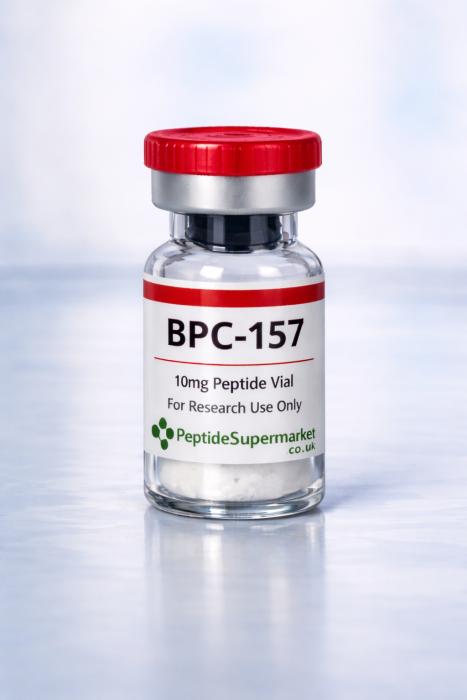
The Power of BPC-157
BPC-157 isn’t a “one-trick” compound. It’s the signal that cuts through all the noise.
Most things you put into the body act like a key that fits one lock—one pathway, one target, one narrow effect.
BPC-157 is different. It’s the master locksmith. It walks into the control room of repair, inflammation, and blood flow… and starts flipping switches with calm, surgical precision.
It’s called Body Protection Compound for a reason.
What BPC-157 is
BPC-157 is a 15–amino acid peptide that comes from a protective protein naturally present in gastric juice.
This isn’t some alien molecule. This is biology—already written into the system—isolated and used the way it was meant to be used: to restore structure, restore function, and restore signaling when the body is stuck in breakdown.
And the way it works is simple:
It doesn’t “support healing.”
It commands healing.
The five core things BPC-157 does
1) It drives angiogenesis the right way
You can’t build a city without roads.
You can’t heal tissue without blood supply.
The moment tissue gets injured, it goes hypoxic—low oxygen. That hypoxia flips on HIF-1α, which then activates VEGF (vascular endothelial growth factor).
VEGF is the road-building crew. It’s the bulldozers, asphalt, and construction teams that expand circulation into damaged zones.
BPC-157 supercharges the HIF-1α → VEGF axis, but the important part is this:
It doesn’t create chaotic junk vessels.
It builds organized, functional vascular infrastructure—a planned rebuild, not a tumor-like mess.
The result is more oxygen, more nutrients, more delivery, and faster removal of waste right at the injury site.
2) It turns fibroblasts into a rebuilding machine
Once you have roads, you need structures.
That’s where TGF-β1 comes in. TGF-β1 is the architectural command signal. It activates fibroblasts and drives the blueprint cascade that produces:
Type I collagen
Type III collagen
Fibronectin
Elastin
That’s steel, concrete, and rebar for the body.
BPC-157 functions like a TGF-β1 amplifier, turning fibroblasts into high-output reconstruction units—so you don’t just “heal”…
You rebuild tissue with stronger structural integrity than what was there before.
This is why it’s not “scar formation.”
It’s regeneration with reinforcement.
Looking to compare BPC-157 prices (UK)? Our price comparison hub puts the listings in one place:
3) It restores blood flow through nitric oxide signaling
Now you’ve got roads. You’ve got rebuilding crews. You still need traffic moving.
BPC-157 enhances endothelial nitric oxide synthase (eNOS) activity, driving nitric oxide production.
Nitric oxide relaxes vascular smooth muscle through the cGMP pathway, opening the system and increasing perfusion.
So you get a real, physical consequence:
A surge of circulation that delivers fuel and clears metabolic waste—like hemodynamic power-washing through damaged tissue.
That’s why BPC-157 isn’t just “repair.”
It restores the conditions repair requires.
4) It works in the brain, not just joints and tendons
If you think BPC-157 is only about muscles and joints, you’re missing the biggest part.
BPC-157 crosses into the central nervous system and upregulates GHR sensitivity—growth hormone receptor responsiveness—so the brain becomes more responsive to growth and repair signaling that’s already circulating.
That translates into:
improved neurite outgrowth
improved synaptogenesis
protection against excitotoxic injury
stabilization of cellular stress signaling in neural tissue
It’s not a “stimulant.”
It’s neurological rehab in a vial.
5) It controls inflammation without sabotaging healing
Inflammation isn’t the enemy. Uncontrolled inflammation is.
BPC-157 doesn’t shut the immune system down.
It negotiates with it.
It reduces destructive pro-inflammatory signaling—especially TNF-α and IL-6 behavior—by modulating the pathways that drive chronic inflammatory momentum, while simultaneously shifting the environment toward resolution by increasing pro-healing signals like IL-10.
So the tissue environment moves from chaotic destruction into organized reconstruction.
Not suppression.
Resolution.
What this fixes in real life (the short list)
Gut barrier and ulcers
BPC-157 doesn’t “soothe.” It repairs.
It supports tight-junction integrity and mucosal defense so the barrier reseals instead of leaking inflammatory debris into the bloodstream. In ulcer states, it combines cytoprotection with vascular repair and collagen rebuilding to physically close the defect.
Tendons, ligaments, and connective tissue
These tissues heal slow because blood supply is poor and collagen lays down disorganized.
BPC-157 drives blood flow, then forces collagen remodeling into stronger, more organized fibrils—so you don’t just “close the tear,” you restore tensile strength.
Bone repair
It supports osteoblast activity and vascular recruitment, accelerating repair and producing stronger mineralized remodeling where the body would otherwise lay down weak, uneven architecture.
Liver protection
It reduces oxidative stress, supports glutathione dynamics, discourages fibrotic signaling, and promotes regenerative repair in hepatocytes—supporting the organ that has to process everything you throw at your system.
If you’re researching BPC-157 and want to compare peptide prices in the UK, start here:
Pancreas protection
It protects beta cells from inflammatory destruction and supports stability of the insulin-producing machinery under stress conditions.
Brain injury and neuroinflammation
It helps modulate neuroinflammatory signaling and excitotoxic stress and supports repair dynamics inside the CNS—acting like a helmet and shock absorber for neurons.
Arthritis and inflammatory joint breakdown
It shifts joint signaling away from cytokine-driven destruction and toward repair—protecting cartilage from being dissolved by ongoing inflammatory chaos.
Cardiovascular protection
It supports ischemia/reperfusion resilience through blood flow signaling and anti-apoptotic protection in stressed tissue—keeping vascular function stable under damage conditions.
The reality of BPC-157
BPC-157 is not “a supplement.”
It’s a repair directive.
It rebuilds roads (angiogenesis), rebuilds structure (collagen signaling), opens flow (nitric oxide), stabilizes the nervous system, and resolves inflammation without shutting the system down.
That’s why it doesn’t belong in the same category as trendy stacks or “support” products.
BPC-157 is the switch that brings the body back into organized repair—systemically.
Compare BPC-157 prices across the UK
Side-by-side prices from every trusted UK supplier stocking BPC-157.


