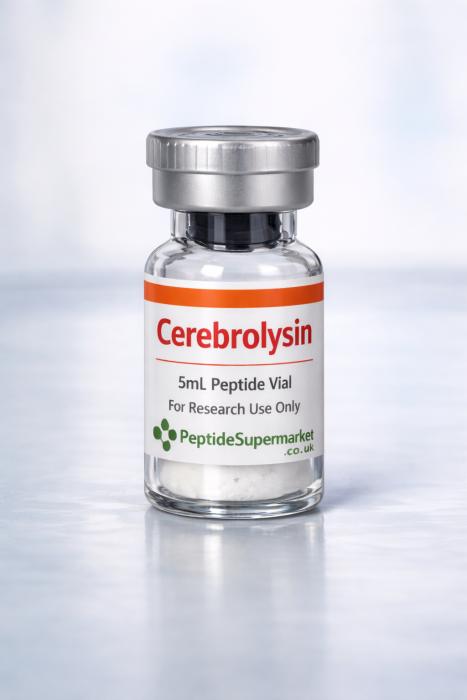
Cerebrolysin
The Neuroprotective Peptide Therapy Used for TBI, Stroke, and Cognitive Decline Research
Quick note: This is not medical advice. I’m not a doctor or a licensed medical professional. This article is for educational and entertainment purposes only. If you have health concerns or questions, speak to a licensed professional.
Traumatic brain injury, Alzheimer’s disease, stroke—these are some of the most life-altering conditions on earth. And the frustrating truth is that many traditional approaches are either limited, slow, or inconsistent.
That’s why Cerebrolysin gets so much attention in neurological circles. It’s widely discussed as a neuroprotective, pro-recovery peptide therapy that may support brain repair, cognition, and long-term outcomes after injury.
Let’s break it down in the same practical format—what it is, how it works, what people report, dosing/cycling patterns, and how it’s commonly stacked.
What Is This Peptide
Cerebrolysin is typically described as a neuropeptide-based injectable originally developed decades ago and used clinically in a number of countries (it’s often discussed as being approved in many places outside the U.S.).
A few key things people highlight about it:
It’s derived from biologically active neuropeptide fragments (often referenced as originating from porcine/young pig brain tissue in early development)
It’s low molecular weight, which is why it’s discussed as being able to cross the blood–brain barrier
It’s positioned as a “multi-target” neurotherapy—more like a neurotrophic support cocktail than a single-pathway drug
In simple terms: it’s used in research and clinical settings as something that may help the brain protect itself, repair faster, and function better after damage.
How Does It Work
Cerebrolysin is typically explained as working through a few major buckets:
1) Neurotrophic support (repair signals)
It’s often described as supporting neurotrophic factors—the signals that help neurons survive, repair, and regrow. These are the same general “repair signals” people talk about when discussing brain plasticity and recovery after injury.
2) Anti-excitotoxic protection (preventing neuron death)
A big concept in brain injury is excitotoxicity—when neurons get overstimulated and damaged (often tied to glutamate overload and inflammatory cascades). Cerebrolysin is commonly discussed as helping reduce this kind of damage.
3) Oxidative stress + neuroinflammation control
It’s also frequently framed as reducing:
oxidative stress (free radical damage)
neuroinflammation (the inflammatory response inside the brain)
4) “Multi-component” mechanism
In the transcript you provided, Cerebrolysin is described as containing or influencing multiple neuroactive components (often discussed in the community as NGF-like and BDNF-like activity, plus other supportive neuropeptides involved in recovery, learning/memory, and repair).
Bottom line: it’s treated as a broad neuroprotective + neurorecovery support compound, not a one-trick pony.
Benefits
Cerebrolysin is commonly discussed for research goals like:
concussion support / traumatic brain injury recovery
stroke recovery support
cognitive decline support (Alzheimer’s / dementia discussions come up a lot)
improved synaptic function (how brain cells communicate)
better cognitive performance + behavioral function
neuroprotection under stress (inflammation, oxidative stress)
amyloid-related discussions (often framed as reducing “sticky protein clumps,” though this is a complex area)
A useful way to think about it: many people use it as a “recovery accelerator” when the brain has taken a hit—whether that’s injury, inflammation, or decline.
Cautions & Contraindications
Common side effects people report
From community reports and common discussions, the side effects most often mentioned include:
dizziness
sweating
nausea
headaches
A lot of people attribute these to either:
dosing too aggressively, or
the nervous system “shifting” during recovery
Either way, if something feels wrong, that’s a “stop and talk to a professional” situation.
Research Dosing & Cycling
Not medical advice — this is a summary of commonly discussed research-style patterns.
One thing that makes Cerebrolysin different from most peptides: it usually comes pre-mixed in liquid (not a powder you reconstitute).
Common format
Often discussed as coming in mL-based ampoules/vials with mg/mL concentration
Community talk commonly references concentrations around the ~215 mg/mL range (varies by product)
Common dosing ranges discussed
5–10 mL per day is a frequently mentioned “working range”
This is usually run as a short intensive block rather than forever use
Common cycling patterns discussed
10–20 days on, then a break (often ~1 month off, sometimes longer)
The logic people use: do a focused “recovery push,” then reassess and let the system stabilize
Want to compare Cerebrolysin prices in the UK? See our Cerebrolysin price comparison page here:
Other Peptides To Stack With
Stacking depends on the goal (TBI, cognition, nerve repair, recovery, etc.). Common add-ons people mention:
For injury recovery / brain inflammation support
BPC-157 + TB-500 (often referenced as a “core healing pair”)
For regeneration + broader repair signaling
Injectable GHK-Cu (often added for systemic repair signaling and tissue quality)
For cognition / neuropeptide support
Semax or Selank (commonly discussed as functional neuropeptides)
For nerve regeneration focus
ARA-290 (often mentioned for nerve pain and nerve repair research)
For “vitality” and systemic recovery support
growth hormone peptide combos people commonly discuss, like:
Tesamorelin + Ipamorelin
(the idea being GH is supportive to recovery systems broadly, including brain health)
Supplements To Stack This With
Common “brain support” supplement stacks people pair with Cerebrolysin-style protocols:
mushroom complex (lion’s mane, reishi, chaga)
creatine (often underrated for brain ATP support)
methylene blue (commonly discussed for cognition/mitochondria, with real caution needed)
testosterone support (people often link hormones to cognition and recovery capacity)
a nootropic blend (amino acids + adaptogens + cognition-support herbs)
NAD+ + glutathione (general cellular support staples)
Lifestyle Tools
If someone is serious about brain recovery, lifestyle is the multiplier. Common tools people pair with brain protocols:
meditation (stress control + nervous system regulation)
animal-based diet + fasting (often discussed for inflammation control and nutrient density)
functional training (rebuilding neuro connections + blood flow + resilience)
HBOT (hyperbaric oxygen therapy is one of the most commonly mentioned add-ons for brain-related recovery)
light therapy (including targeted “brain light” devices like Vielight, plus sunlight exposure)
hot/cold therapy (sauna often gets highlighted for brain support and systemic recovery)
bodywork (massage, acupuncture, chiropractic — especially for overall nervous system downregulation and circulation)
Pros
it’s a multi-component neurotherapy (not a single pathway)
it has decades of real-world use and discussion
it’s commonly described as used/approved in many countries, which is rare in the peptide world
it’s “brain-first” — designed around neuroprotection and recovery
Cons
it can be hard to find in some regions (especially in the U.S., based on common community experience)
it’s expensive compared to typical peptides
protocols are more “clinical-style” (mL-based, short intensive cycles), which can be intimidating for beginners
Want to compare Cerebrolysin prices in the UK? See our Cerebrolysin price comparison page here:
Compare Cerebrolysin prices across the UK
Side-by-side prices from every trusted UK supplier stocking Cerebrolysin.


