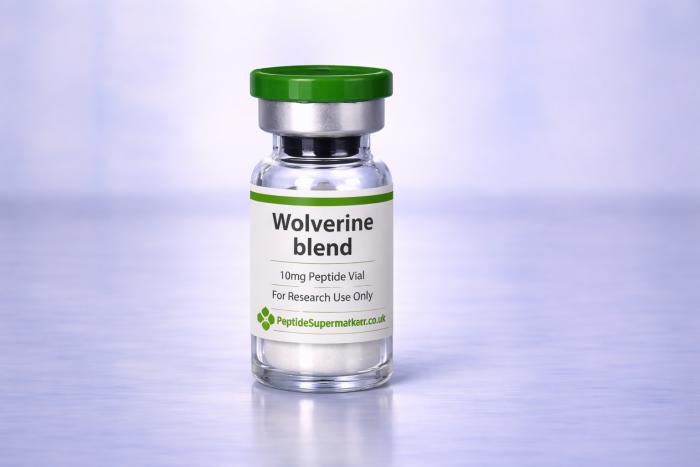
The Wolverine Protocol
The 3-Peptide Injury Stack That Speeds Up Real Tissue Repair
Quick note: This is not medical advice. I’m not prescribing, diagnosing, or treating anything. Before you put anything into your body, talk to a licensed physician. This is educational content only.
If you’re over 35, you already know the deal. Aches turn into “little injuries.” Little injuries turn into chronic problems. And once you get hurt, the default advice is always the same: rest, ice, wait, take something for the pain, maybe do PT for months… and if it still isn’t right, start talking about surgery.
The problem is that healing isn’t just time. Healing is signals. Your body doesn’t repair tissue because you “rested enough.” It repairs tissue because it receives the right biochemical instructions at the right time. And as you get older, those signals get weaker, scar tissue builds, mechanics get worse, and the whole recovery process slows down.
That’s exactly why I put together what I call The Wolverine Protocol.
Not because it “manages” injuries. Because it’s designed to help your body repair the injury properly—faster, cleaner, and with better tissue quality—so you can actually get back to how you were before you got hurt.
What The Wolverine Protocol Is
The Wolverine Protocol is a three-peptide stack:
BPC-157
TB-500 (or Thymosin Beta-4, very similar and often used interchangeably)
GHK-Cu (copper peptide)
Each one has a job. On their own, they’re useful. Together, they’re synergistic—because they cover the three things your body needs when tissue gets damaged:
Shut down excessive inflammation and start repair signaling
Rebuild and reorganize tissue correctly (not messy scar tissue)
Finish and stabilize the repair with better tissue quality
Why Injuries Don’t Heal Well After 30
When you’re young, you heal like it’s automatic. When you’re older, it’s slower—and it’s not just “age.” It’s the combination of:
weaker repair signaling
more accumulated wear-and-tear
more chronic inflammation in the background
worse mechanics and compensation patterns from old injuries
scar tissue that never got remodeled properly
So the injury doesn’t just “go away.” It becomes this lingering issue that keeps showing up again and again.
And the mistake people make is thinking recovery is about doing less.
Real recovery is communication. Your cells need instructions.
Looking to compare Wolverine blend prices (UK)? Our price comparison hub puts the listings in one place:
How The Three Peptides Work Together
Here’s the simplest way to understand it.
1) BPC-157 is the signal
BPC-157 is the one that says:
“Start repairing this tissue now.”
It’s the peptide that helps drive the “repair mode” signals—calming excessive inflammation, supporting blood flow to the area, and recruiting repair processes.
This is why, in this protocol, BPC is treated as site-specific: you want it where the damage is.
2) TB-500 is the builder
TB-500 (Thymosin Beta-4) is the one that acts like the foreman on the construction site.
It supports regeneration, helps the body organize repair properly, and is heavily associated with improving the way tissue remodels—especially when scar tissue and stiffness are part of the problem.
This is the part that helps take you from “it doesn’t hurt” to “it actually moves correctly again.”
3) GHK-Cu is the finisher
GHK-Cu is the quality control and tissue-finishing peptide.
It’s tied to tissue quality—skin, nerves, blood vessels, and cleaning up oxidative stress that lingers after an injury. It’s the one that helps the repair look and function more like “original equipment” instead of a rushed patch job.
What This Stack Is Designed To Do
This isn’t pain management. This is aimed at:
faster tissue repair
better tissue remodeling
reduced stiffness and better range of motion
less “lingering inflammation” around the injury
cleaner recovery so you’re not constantly re-tweaking the same area
And the big difference is this:
You’re not just trying to “get back in the game.”
You’re trying to get back to 100%, so you’re not playing your life at a lower level because one injury never fully resolved.
How People Run The Wolverine Protocol In Practice
Not medical advice — this is a research-style outline based on the way the protocol is commonly discussed.
Reconstitution basics
Use bacteriostatic water
Add gently, don’t shake
Swirl gently and store in the fridge
Dosing approach people commonly use
BPC-157: often run daily, commonly treated as site-specific, and usually run for at least 14 days
TB-500 / Thymosin Beta-4: commonly run systemically, often dosed every few days (a common schedule is every 5 days)
GHK-Cu: commonly run daily, often subcutaneous
How long to run it
Minimum: 2 weeks (especially for BPC)
More typical for full tissue remodeling: 4–6 weeks
The goal isn’t just “pain stopped.” The goal is:
function restored and tissue rebuilt.
What Results Usually Look Like Over Time
People want a timeline, so here’s the pattern this protocol is designed to create:
Week 1
pain drops hard
sleep improves because your system isn’t constantly stressed from the injury
stiffness reduces (outside the expected tightness around the injury)
Week 2
swelling is significantly reduced
range of motion can return fast (often 80–90% depending on the injury)
Week 4
training returns at partial capacity
movement becomes functional again
you stop “moving like an injured person”
Week 6
most people are close to full recovery
the injury is no longer dictating your daily choices
This is why I call it Wolverine. The goal is regeneration speed and tissue quality—not endless waiting and hoping.
The 3 Biggest Mistakes People Make
1) Injecting everything into the stomach
BPC is treated as site-specific in this protocol. If the injury is the elbow, it goes near the elbow. If it’s the knee, it goes near the knee.
2) Stopping the moment pain drops
Pain is only one metric. Tissue remodeling takes longer. The protocol is designed to run long enough to lock in the repair.
3) Mixing and handling it incorrectly
This is basic but it matters:
use sterile practices
refrigerate after mixing
don’t shake the vial aggressively
If you treat fragile compounds like they’re indestructible, you get weaker results.
Want to compare Wolverine blend prices in the UK? See our Wolverine blend price comparison page here:
The Part People Get Wrong
This protocol is an amplifier, not a replacement for movement.
If you run this stack and then sit on the couch doing nothing, you’re missing the point. You still need to:
rehab intelligently
move the area
progressively reload tissue
rebuild mechanics so you don’t re-injure it
The peptides help speed up and improve the repair process.
You still have to apply the mechanical training that tells the body what to build.
Who This Is For
If any of these are true, this protocol is aimed at you:
you’ve got an injury that “won’t heal”
you’ve got chronic tendinitis, scar tissue, stiffness, or recurring tweaks
you’ve been putting off surgery and trying to find a real solution
you’re trying to stay active for decades, not just limp through the next few years
you refuse to let an old injury become your permanent identity
Final Thoughts
If you’re injured and it isn’t improving, that’s a signal to take action. The Wolverine Protocol is built around one idea:
Healing isn’t luck. It’s signaling.
And when you give your body stronger repair signals—and you back it up with smart movement—you can rebuild faster and get back to what you’re supposed to be able to do.
Compare Wolverine Blend prices across the UK
Side-by-side prices from every trusted UK supplier stocking Wolverine Blend.


