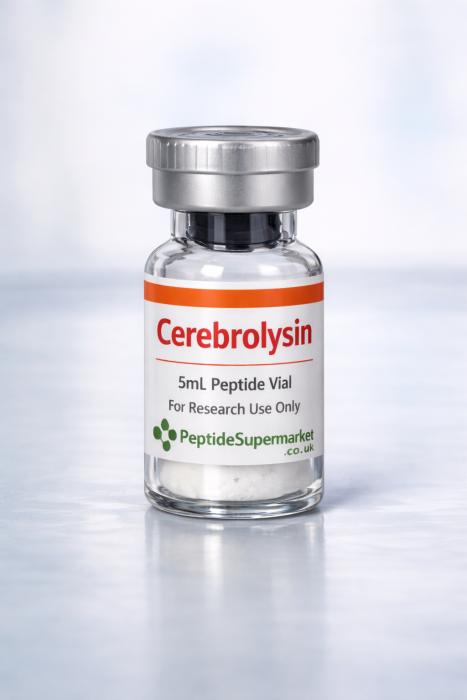
Understanding Cerebrolysin: A Hidden Gem
Cerebrolysin isn’t “new.” It’s been around far longer than most people realize—it just hasn’t been widely used in the places you’d expect, for the reasons you’d expect.
Your most valuable asset is the three-pound universe between your ears. If that fails, everything fails. Cerebrolysin matters because it addresses the predictable ways the brain breaks down—at the mechanism level, not the symptom level.
The Three Catastrophic Points of Brain Failure
Brain decline isn’t a mystery. It follows a repeatable collapse pattern—three failures that stack on top of each other.
1) Systemic inflammation: the inflammatory inferno
Microglia are supposed to be janitors and security for the brain. Under chronic inflammatory pressure, they flip into a destructive state:
inflammatory cytokines surge (especially IL-6 and TNF-α)
microglia shift from “clean and repair” behavior to “burn and destroy” behavior
debris clearance fails, and the brain starts cooking itself from the inside out
This isn’t a side effect. This is a primary driver.
2) Metabolic famine: starving the brain in a sea of fuel
The brain is metabolically expensive—huge energy demand relative to its size.
When insulin signaling collapses systemically:
glucose can be present in abundance, but neurons can’t use it properly
mitochondria sputter, ATP drops
synaptic function degrades
axonal transport fails
neurons don’t just slow down—they begin dismantling themselves
This is why Alzheimer’s gets described as “type 3 diabetes” in the metabolic framework: the brain is starving while surrounded by fuel it can’t access efficiently.
3) Energy blackout: the terminal phase
Inflammation + metabolic starvation eventually becomes pure energy failure:
ATP becomes insufficient to maintain membrane potential
sodium/potassium pump function fails
repair systems go offline
oxidative damage accumulates unchecked
apoptosis triggers, and connectivity shuts down permanently
That’s not a “memory issue.” That’s a systems failure.
To compare Cerebrolysin prices across UK listings, head over to our comparison hub:
What Cerebrolysin Is
Cerebrolysin is a peptide-based nootropic in the real sense of the word:
a low-molecular-weight, purified peptide fraction derived from porcine brain tissue
a concentrated bioactive cocktail of neurotrophic factors and supportive peptides
designed to deliver growth and repair signals the brain already understands
It’s not “blocking one receptor.” It’s a torrent of biological information—more like a firmware update than a symptomatic patch.
What Cerebrolysin Does Mechanistically
1) It suppresses the inflammatory inferno
Cerebrolysin modulates microglial activation:
suppresses pro-inflammatory cytokine expression (IL-6, TNF-α)
shifts microglia away from destructive behavior back toward cleanup and repair
restores the brain’s ability to handle pathological debris instead of amplifying damage
It doesn’t just “reduce inflammation.” It restores brain immune function.
2) It ends the metabolic famine
Cerebrolysin supports cerebral glucose metabolism and signaling:
increases glucose uptake in key cognitive regions
improves metabolic responsiveness inside brain tissue
restores fuel delivery to mitochondria so ATP production can normalize
When fuel returns, neurons can do what they’re designed to do: maintain gradients, fire properly, repair damage, and clear waste.
3) It rebuilds from the blackout
This is where it shifts from protective to regenerative.
The neurotrophic signaling triggers the survival and growth cascades that drive:
neurogenesis: support for generation of new neurons in memory-critical regions
synaptogenesis: formation of new dendritic spines and synaptic connections
angiogenesis: vascular support so rebuilt tissue has oxygen and nutrient delivery
That’s not symptom management. That’s reconstruction.
Where This Shows Up Clinically
Cerebrolysin is positioned as a “brain repair” tool across multiple neurological failure patterns:
Alzheimer’s and dementia
Plaques and tangles are the grave markers. The killers are the mechanisms: inflammation, metabolic failure, and energy collapse. Cerebrolysin targets those drivers.
Vascular dementia
Where blood flow and micro-injury accumulate, angiogenesis support + neuroprotection matters because it protects vulnerable surrounding tissue and supports recovery capacity.
Multiple sclerosis
As a demyelination pattern driven by systemic dysregulation, the value is immunomodulation + neurotrophic support for survival and repair capacity within damaged circuitry.
Parkinson’s
Loss of dopamine neurons is the core problem. Cerebrolysin functions as a delivery platform for neurotrophic support tied to survival of those neuronal populations, with real implications beyond simple symptomatic masking.
How It’s Used Strategically
You don’t run full reconstruction year-round.
Cerebrolysin is typically used in cycles:
a concentrated treatment window
followed by a break for integration and consolidation
That approach is designed to maximize the signal while allowing the newly supported circuitry to stabilize.
Tactical intervention. Not lifelong dependency.
The Synergy Stack Logic
Cerebrolysin can be the centerpiece, but it works best when the rest of the system supports the rebuild:
Cortexin
Amplifies neurotrophic signaling—think of it as turning up the brain’s internal production volume so the regenerative signal hits harder.
Alpha-GPC
Provides the raw material for acetylcholine—so the rebuilt circuitry has the neurotransmission fuel to actually run.
BPC-157
Reduces systemic inflammatory load, supports barrier integrity, and improves vascular environment—creating a cleaner terrain for neurorepair to succeed.
GHK-Cu
A repair and remodeling signal that supports tissue integrity and antioxidant systems—functional “armor” that improves the quality of the rebuild.
Pricing for Cerebrolysin can vary, so we’ve put together a UK price comparison hub here:
Safety Profile Reality
Cerebrolysin has been used clinically for decades across many countries.
The commonly reported issues are generally mild and transient:
injection site reactions
agitation
mild dizziness
When you compare that to the side-effect burden and limited functional impact of many standard cognitive decline drug approaches, the risk-benefit picture isn’t close.
The Bottom Line
Cognitive decline isn’t destiny. It’s input-driven biology.
chronic inflammation is an input
metabolic dysfunction is an input
energetic failure is an input
Cerebrolysin is the opposite type of input: targeted regenerative biochemistry designed to restore function by addressing the collapse points directly.
Your brain is plastic. It responds to signals. And if you stop treating it like it’s guaranteed to fail, you can change the trajectory.
Compare Cerebrolysin prices across the UK
Side-by-side prices from every trusted UK supplier stocking Cerebrolysin.


