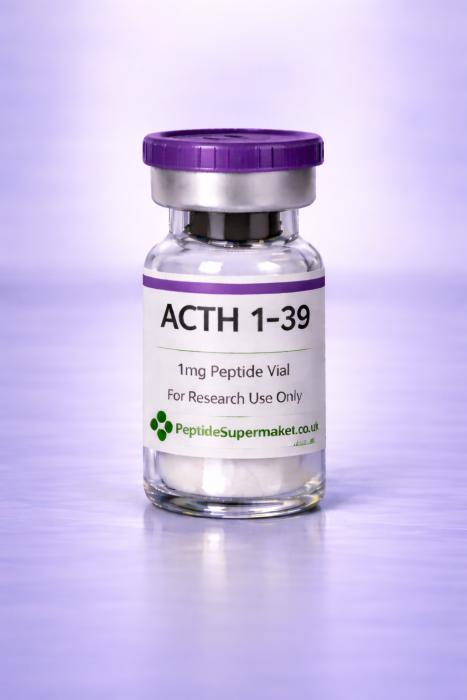
ACTH, or adrenocorticotropic hormone, is one of the key messengers in the body’s response to longer-term stress. Rather than acting alone, it sits inside a wider signalling chain that links the brain, the pituitary gland and the adrenal glands.
Understanding ACTH is useful because it helps explain how the body turns a stress signal into hormone release. It also gives a clearer picture of how the adrenal cortex differs from the adrenal medulla, two areas that are often mentioned together but do different jobs.
What ACTH stands for
Adrenocorticotropic hormone can be broken into parts. “Adreno” refers to the adrenal gland, “cortico” points to the cortex, or outer layer, and “tropic” suggests that this hormone stimulates the release of other hormones.
In simple terms, ACTH is a hormone that helps tell the adrenal cortex what to do.
Where ACTH comes from
The process begins in the brain. In this teaching model, longer-term stress signals reach the hypothalamus, which then activates the paraventricular nucleus. That leads to the release of corticotropin-releasing hormone, usually shortened to CRH.
Before you buy ACTH, it’s worth checking a UK price comparison first. We keep a running list here:
CRH then travels to the anterior pituitary through the hypothalamic-hypophyseal portal system. There, it acts on corticotroph cells, which release ACTH into the bloodstream.
How ACTH fits into the stress pathway
Once ACTH is released, it travels through the blood to the adrenal glands, which sit above the kidneys. Its main target is the adrenal cortex, not the adrenal medulla.
That distinction matters. The adrenal medulla is usually associated with short-term fight-or-flight responses and the release of catecholamines such as epinephrine and norepinephrine. The adrenal cortex, by contrast, is more closely tied to the longer-term hormonal stress response described here.
The three layers of the adrenal cortex
Zona glomerulosa
The outermost layer is the zona glomerulosa. In this overview, it is described as the area linked to mineralocorticoids, especially aldosterone. These hormones are involved in the regulation of minerals and water balance in the blood.
Zona fasciculata
The largest layer is the zona fasciculata. This is the main glucocorticoid-producing region in the explanation, associated with hormones such as cortisol, cortisone and corticosterone. These hormones are tied to metabolism, especially the handling of glucose during stress.
Zona reticularis
The innermost cortical layer is the zona reticularis. This is presented as the area linked to sex hormone production, particularly androgens such as DHEA.
Why ACTH matters
ACTH matters because it helps turn a stress signal into an endocrine response. It forms a bridge between the brain’s interpretation of stress and the adrenal cortex’s hormone output.
Looking to compare ACTH prices (UK)? Our price comparison hub puts the listings in one place:
This is one reason ACTH often appears in basic physiology teaching. It shows how one hormone can trigger another and how tightly the nervous and endocrine systems work together.
ACTH, stress and the bigger picture
The clearest way to think about ACTH is as part of a chain. Stress influences the hypothalamus. The hypothalamus releases CRH. CRH stimulates the anterior pituitary. The anterior pituitary releases ACTH. ACTH then acts on the adrenal cortex.
That chain helps explain why long-term stress is never just “in your head”. The body translates it into a hormone response with real physiological effects.
Final thoughts
ACTH is best understood as a central hormone in the long-term stress response, linking the hypothalamus, anterior pituitary and adrenal cortex. It is part of the body’s wider stress machinery rather than a stand-alone hormone acting in isolation.
For readers exploring peptides uk as part of broader hormone education, this is a useful reminder that understanding function comes first. Before people buy peptides uk or search where to buy peptides, it helps to know what a signal is actually doing in the body.
Compare ACTH 1-39 prices across the UK
Side-by-side prices from every trusted UK supplier stocking ACTH 1-39.


