Heart-health discussions are often reduced to a few familiar numbers, especially cholesterol and blood pressure. That is understandable, but it can also oversimplify a much broader picture. In peptide circles, a different argument is often made: cardiovascular risk is shaped not only by lipids, but also by inflammation, endothelial health and the body’s ability to repair damaged tissue.
That does not mean established medical care should be dismissed. It does mean there is growing interest in looking beyond a single marker and asking a more useful question: what is happening inside the vessel wall itself?
This article is for educational purposes only and is not medical advice.
Why inflammation keeps coming up in cardiovascular discussions
One of the central ideas in peptide education is that arteries are not passive pipes. They are living tissue lined by the endothelium, a highly active barrier that helps regulate circulation, vascular tone and what can move into the arterial wall.
In many discussions, chronic inflammation is described as a major driver of endothelial dysfunction. When that inner lining is under stress, the environment becomes less stable. Rather than focusing only on circulating cholesterol, this line of thinking puts greater weight on inflammatory signalling, vascular irritation and the long-term consequences of poor tissue resilience.
That is why markers such as C-reactive protein are frequently mentioned in broader heart-health conversations. The practical takeaway is simple: cardiovascular risk may involve more than one headline number.
The symptoms people often overlook
Many people think heart-health problems only become visible when something dramatic happens. In reality, discussions around endothelial dysfunction often include more subtle signs that may appear earlier.
Fatigue is one example. Reduced vascular efficiency can affect how well tissues are supplied and recovered. Brain fog is another, particularly when inflammation is being discussed in relation to circulation and the blood-brain barrier. Erectile dysfunction is also frequently described as an early warning sign because smaller blood vessels may show strain before larger ones do.
None of these symptoms proves a diagnosis on its own. They do, however, fit into a wider conversation about systemic stress, inflammatory load and vascular health.
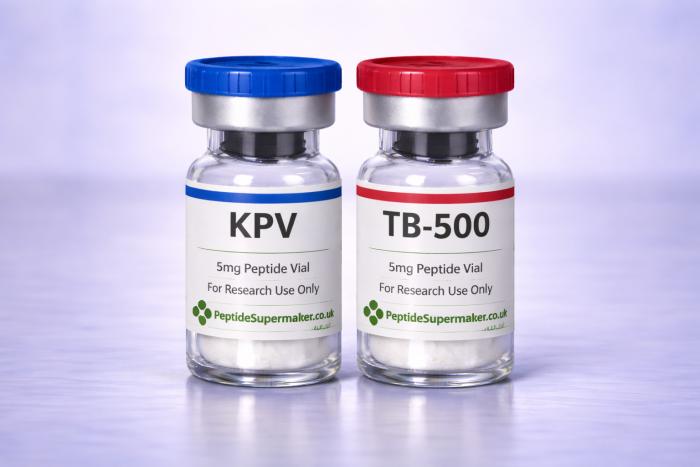
If your goal is simply to compare TB-500 and KPV prices (UK), use our dedicated comparison page:
Where KPV fits into the picture
KPV is often discussed as a small peptide fragment linked to anti-inflammatory signalling. In research-focused conversations, it is explored less as a blunt suppressant and more as something associated with regulation and resolution.
That distinction matters. Peptide users often draw a line between simply dampening symptoms and helping the body move out of a prolonged inflammatory state. In that context, KPV is discussed in relation to immune balance, tissue tolerance and barrier support.
For cardiovascular readers, the main interest lies in the possibility that better inflammatory control may help support endothelial function. That remains an area of discussion rather than an established treatment pathway, but it is one reason KPV appears so often in regenerative-health conversations.
Why TB-500 is discussed alongside KPV
If KPV is usually framed around inflammation, TB-500 is typically framed around repair.
This is why the two are often mentioned together. One side of the conversation focuses on reducing the biological stress that keeps tissue irritated. The other focuses on what happens after damage is already present, especially in relation to healing, fibrosis and recovery.
In peptide communities, TB-500 is explored in relation to tissue remodelling, cellular migration and regenerative signalling. Supporters often describe it as relevant when the issue is no longer just irritation, but structural change. That is a major reason it comes up in conversations around recovery, scarring and functional restoration.
A broader way to think about cardiovascular health
The most useful message here is not that one peptide solves everything. It is that cardiovascular health may be better understood as a layered process.
Inflammation matters. Endothelial stability matters. Tissue repair matters. Metabolic health matters. Recovery capacity matters. A person can look at cholesterol alone and miss the fact that the wider biological environment is still poor.
That is why peptide discussions often focus on root processes rather than isolated symptoms. Whether or not someone agrees with every claim made in those circles, the underlying lesson is sensible: better outcomes usually come from understanding the system, not just chasing a lab number.
To compare KPV and TB-500 prices across UK listings, head over to our comparison hub:
Sourcing considerations in the UK
For readers comparing peptides uk options, product quality matters just as much as the theory behind the compound. That is particularly important for anyone searching buy peptides uk, where to buy peptides or peptide supplied uk standards while trying to separate genuine quality from noise.
Cheap peptides may look attractive on price alone, but consistency, testing and clear labelling should matter more than marketing. For anyone researching where to buy peptides, a reliable peptide supplied uk source should offer transparency first and hype second.
Final thoughts
The strongest takeaway from these cardiovascular peptide discussions is that heart health is rarely a one-variable story. Inflammation, endothelial function and tissue repair are all part of the wider picture, which is why KPV and TB-500 continue to attract interest in research-minded communities.
That does not make them a shortcut or a replacement for proper medical oversight. It does explain why they are being explored as part of a broader regenerative conversation.
For readers comparing options before they buy, click here
Compare KPV prices across the UK
Side-by-side prices from every trusted UK supplier stocking KPV.


